
Last updated November 22, 2026
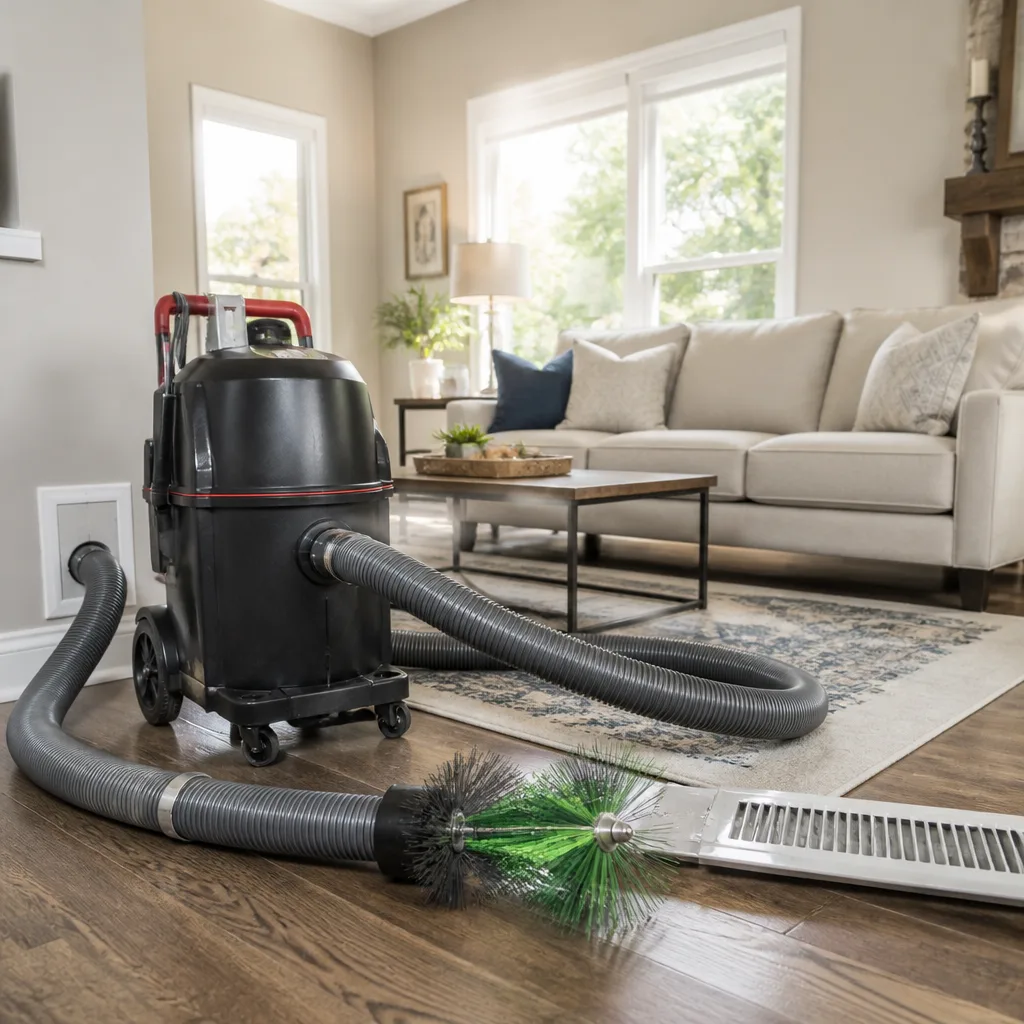 Whole-home duct cleaning
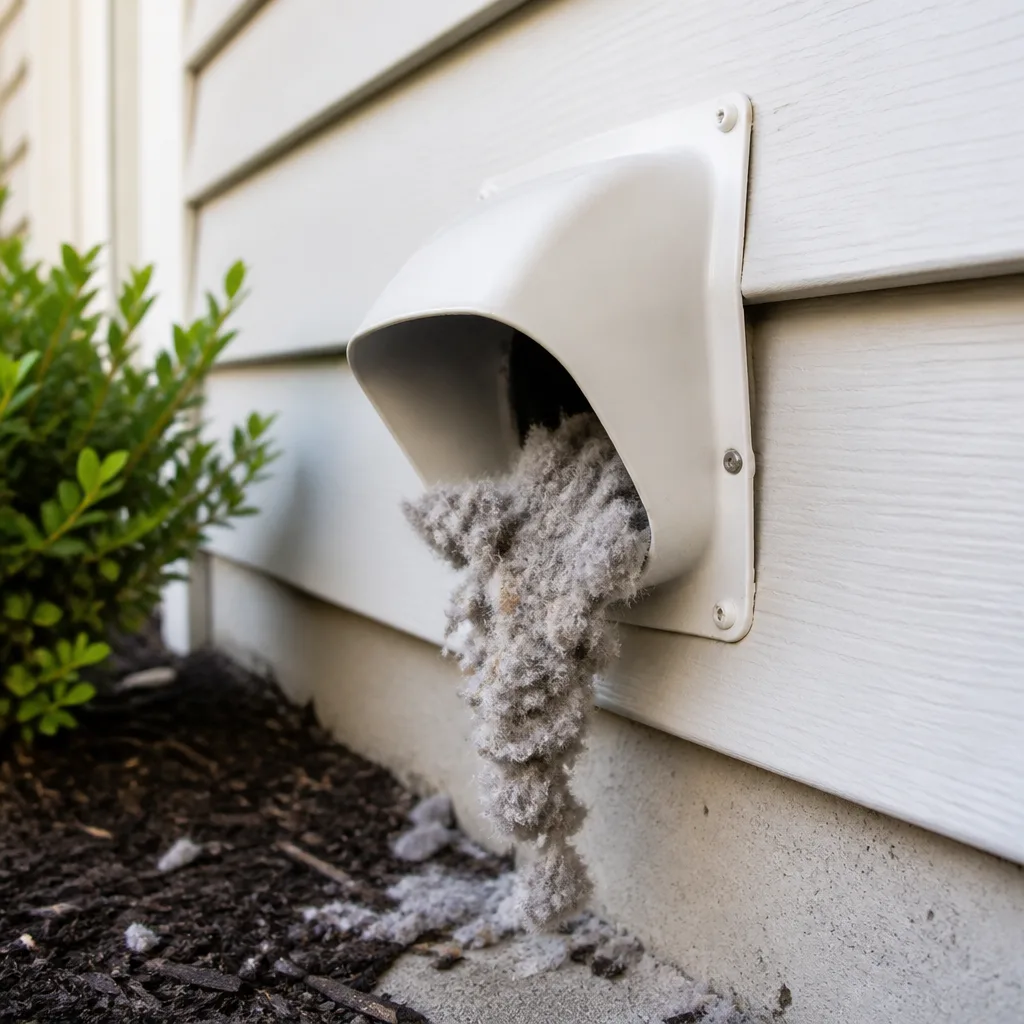 Dryer vent cleaning
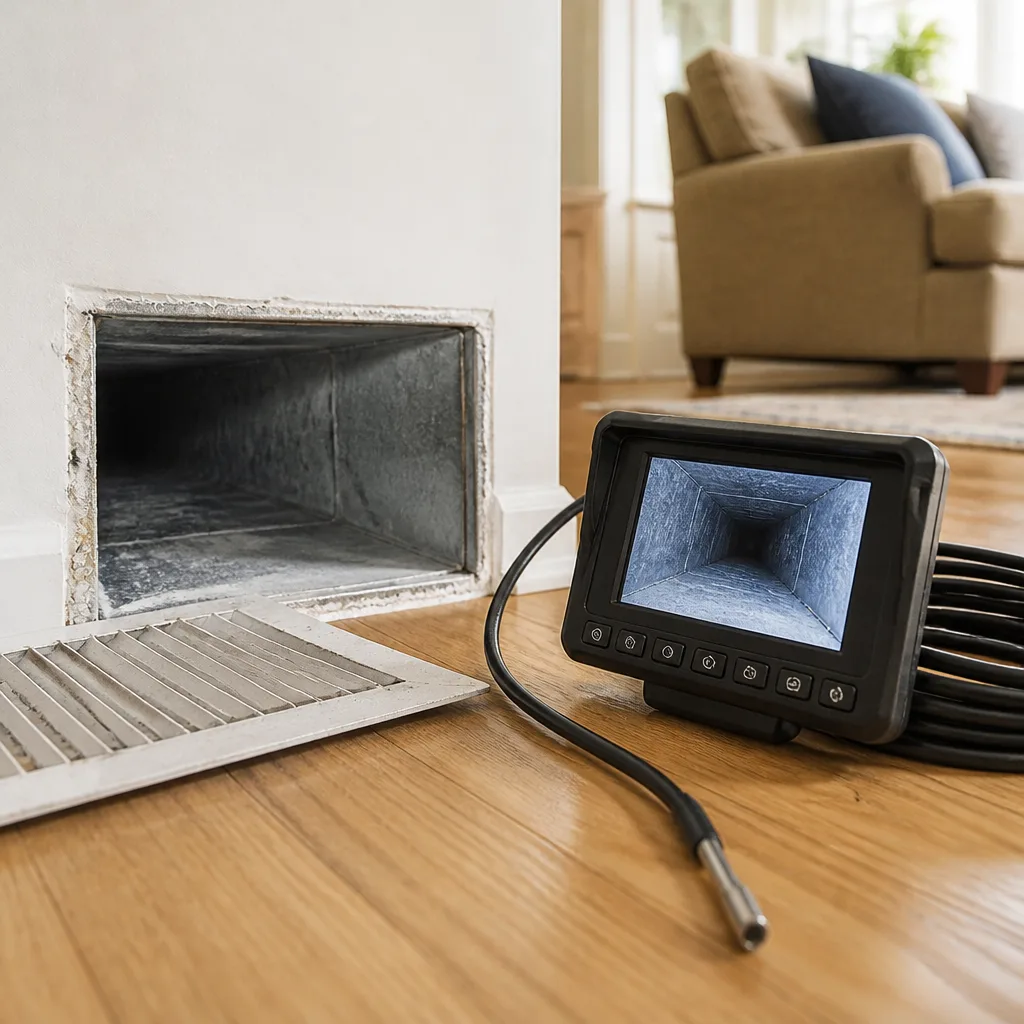 Camera inspection
 Sanitizing & deodorizing
Whole-system duct and dryer vent check with before-and-after photos - you see exactly what came out of your vents
That "$99 whole-house special" is a bait ad - the real number appears once they are in your hallway, or the "clean" is a shop-vac at the register. We photograph the inside of your ducts before and after instead.
Air Duct Cleaning Warning Signs: A Williamsbridge Homeowner’s Reference Guide
If one room in your house is always stuffier than the others regardless of thermostat setting, that’s not an HVAC problem. It’s almost always a duct problem, and no amount of filter-changing will fix it. Homeowners across Williamsbridge spend real money on tune-ups, filters and allergy medication while the actual air pathway keeps degrading behind the drywall. This guide decodes the specific signals that tell you the ducts need attention, separates duct symptoms from equipment symptoms, and gives you a severity triage you can act on. It’s written from Williamsbridge, for the older homes and two-family layouts that make up most of the neighborhood.
Quick Answer
The core warning signs of a duct system that needs cleaning or repair are: uneven room temperatures that don’t respond to thermostat changes, musty odors that appear only when the HVAC is running, visible dust plumes at supply registers, black rings around ceiling vents, rattling or whistling at joints, and rust staining near registers. If you notice musty odors or visible biological growth, treat it as urgent. If you notice uneven airflow or dust, schedule an inspection. Structural signs like separated joints should be looked at within 30 days.
Styles & brands we work with
- Whole-home duct cleaning
- Dryer vent cleaning
- Camera inspection
- Sanitizing & deodorizing
Table of Contents
- Airflow Warning Signs: When One Room Won’t Cooperate
- Air Quality Warning Signs: The Smell That Only Shows Up When the Heat Kicks On
- Structural Warning Signs: Rattles, Gaps and Joint Separation
- Biological Growth vs. Particulate Buildup: Two Very Different Problems
- Warning Signs Unique to Older Williamsbridge Housing
- Severity Triage: Monitor, Inspect, or Service Now
- Signs That Look Like Duct Problems but Aren’t
- What a Real Duct Inspection Actually Covers
Airflow Warning Signs: When One Room Won’t Cooperate
Airflow symptoms are the most misread category. Homeowners assume the furnace is undersized or the thermostat is on the fritz. In our experience, uneven airflow is almost always a duct-side story: a crushed flex run, a damper stuck half-closed, a disconnected collar behind a register boot, or a length of duct that’s been quietly leaking conditioned air into a joist bay for years.
Here’s how to read the airflow signals in a Williamsbridge home:
- One room never catches up. If the back bedroom runs 6 to 8 degrees warmer than the front room in summer, no thermostat adjustment will fix it. That’s a distribution problem, not a cooling problem.
- Weak register output. Hold a tissue near a supply register. It should flutter steadily. If it barely moves while other registers blow hard, that run is restricted or disconnected.
- Rooms that flip. A room that’s cold in summer but hot in winter often has a leaking duct pulling air from an unconditioned attic or crawl space. That’s a duct sealing issue more than a cleaning one.
- Whistling at the register. A high-pitched whistle usually means the duct behind that register is crushed, undersized for the boot, or has a partial blockage.
- Furnace runs longer than it should. When half the air leaks out before it arrives, the system runs longer to hit setpoint. You’ll notice this on the gas bill before you notice it on the thermostat.
Two-family homes around Williamsbridge deal with this constantly. When the second-floor unit has its own air handler ducted into the same chase as the first floor, one unit’s return can pull from the other unit’s supply if joints have opened. That’s one of the reasons odd pressure and cross-unit airflow complaints come up so often here. A proper inspection covers the whole pathway in one visit rather than guessing at what’s under the floor. That full-system approach is what separates Air Duct Cleaning Williamsbridge from a one-pass vacuum job.
Air Quality Warning Signs: The Smell That Only Shows Up When the Heat Kicks On
Air quality symptoms are the ones homeowners notice but don’t attribute to the ducts. If the smell only appears when the system is running, it’s almost certainly living in the air pathway. When it’s there all the time, the source is usually somewhere else entirely.
Watch for these signals:
- Musty odor only when the HVAC runs. This points to biological growth somewhere in the system – the evaporator coil, the drain pan, or the duct liner. The system is picking up the smell and distributing it through the house.
- Visible dust plumes at supply registers. Turn the system on and watch a register for 30 seconds. A puff of dust at startup is normal. A steady stream is a sign of accumulated debris in the supply trunk.
- Dust settling faster than it used to. If you’re dusting weekly and it doesn’t help, debris inside the duct pathway is likely recirculating through the supply side.
- Allergy symptoms that track with HVAC cycles. If everyone feels worse when the heat or AC is on, the distribution system is delivering whatever’s growing inside it.
- Black spotting on registers or diffusers. Dark specks around the fins usually point to moisture and biological growth rather than dust.
When the problem is genuinely the air pathway, the fix is a full clean, a proper dry, and a sanitizing step backed by something more than a spray bottle. That’s where brands matter. We use Rotobrush and Nikro equipment because they’re built for holding dust inside the machine rather than pushing it through the room, and we deploy Honeywell and Aprilaire air-quality components where the duct system benefits from filtration upgrades after cleaning. Cleaning without the follow-up rarely holds.
If all of this points to a full-system clean, air duct cleaning is the place to start rather than treating the symptoms room by room.
Structural Warning Signs: Rattles, Gaps and Joint Separation
Structural symptoms are the easiest to miss because they’re often quiet. But separation at joints is the most expensive warning sign on this list. Every gap in a supply duct leaks conditioned air into places it never belonged. Every gap in a return duct pulls garage fumes, attic dust, or basement air into your living space.
Listen and look for these:
- Rattling or banging at system startup. Metal ductwork expands and contracts with temperature. If the rattle is distinct at startup and then quiets, duct connections have loosened or a damper is slapping.
- Visible gaps at duct joints. Where duct sections meet, look for tape that’s peeling, mastic that’s cracked, or a clear daylight gap. Any of those is a leak.
- Duct tape (the old gray kind) failing. If your home still has the original gray duct tape holding joints together, it has likely dried out. That tape is not what modern HVAC installers use. It fails on its own schedule.
- Dust streaks on ceilings or walls near vents. Air leaking from a joint behind drywall paints a streak on the surface. It’s a reliable marker for a hidden leak.
- Whistling at a return grille. A whistle at the return usually means the return duct is undersized or partially blocked.
Structural problems and cleaning go hand in hand because you can’t clean a pathway that’s disconnected – the vacuum pulls through the leaks instead of the system. That’s why Air Duct Cleaning Williamsbridge treats duct repair and sealing as part of the same visit rather than a separate booking. Clean it, seal it, sanitize it, one team. If your system is showing structural symptoms, the inspection should happen within 30 days, before the leaks get worse and the heating season amplifies them.
Biological Growth vs. Particulate Buildup: Two Very Different Problems
Not all duct contamination is the same, and this is where most homeowners get sold the wrong service. Particulate buildup is dust, dirt, pet hair, construction debris and skin cells – dry, powdery, and fixable with a proper vacuum and agitation. Biological growth is mold, mildew, bacteria or fungi living on an organic surface – a moisture indicator, and fixable only if you address the moisture first.
The warning signs separate cleanly:
Signs of particulate buildup
- Steady dust plume at registers on startup
- Visible gray or dark dust inside the register boot
- Rapid dust accumulation on furniture
- No odor (particulate doesn’t smell like much unless it’s pet hair)
Signs of biological growth
- Musty or earthy odor that appears only when the system runs
- Visible fuzzy growth or black spotting at register fins or inside the boot
- Condensation or standing moisture at the air handler or drain pan
- Rust staining near registers or along duct seams (moisture indicator)
- Worsening allergy symptoms specifically during system operation
The remediation order matters. With biological growth, you have to find and stop the moisture source first – a leaking drain pan, a clogged condensate line, an oversized AC touching saturated air – then clean the system, then dry it, then sanitize. Cleaning a wet system and immediately re-wetting it wastes the work. Particulate-only problems skip the moisture hunt. That’s the reason we carry Abatement Technologies equipment for the sanitizing step and Guardsman-grade finishing products for the post-clean protection. Clean-and-leave usually shows up as a musty smell returning within a season. Finish-and-protect keeps it clean.
Warning Signs Unique to Older Williamsbridge Housing
The housing stock in Williamsbridge isn’t the same as what you’d see in a newer build out toward the borough edges. Plenty of the homes here were built between the 1920s and 1950s, and many were retrofitted with forced-air systems decades later. That combination – older envelopes, later HVAC retrofits, and ductwork that doesn’t always match the original room layout – creates specific warning signs you won’t read about in generic duct-cleaning articles.
Register rust staining as a moisture indicator
Look at the supply registers in your home. If you see rust halos around the grille, orange-brown staining on the ceiling near the boot, or rusty screws in the frame, moisture is condensing somewhere in that run. In older Williamsbridge homes, this often traces back to a boot that isn’t properly sealed against the ceiling cavity, letting humid summer air meet cold duct metal. Rust staining is not a cosmetic problem. It’s telling you which runs need to be sealed.
Black dust rings around ceiling supply boots
Faint black or gray rings on the ceiling where a supply boot meets the plaster are common in older homes. Two things cause them: fine dust escaping a poorly sealed boot, or air movement pulling dust toward the leak and depositing it. Either way, the ring marks a spot where conditioned air is bypassing the duct path. If the rings are getting darker, the leak is getting worse.
The smell of activated metal on first heat-on
When the heat comes on for the first time each fall, many Williamsbridge homes carry a sharp, metallic smell for the first few cycles. A little of that is normal – it’s hot dust burning off the heat exchanger. But if the smell persists for days or lingers all season, or if it’s accompanied by any musty undertone, the duct system has debris in it that’s cooking every time the furnace fires. That’s a duct pathway problem rather than a furnace problem.
Basement and crawlspace returns
Some Williamsbridge homes return air from a basement or lower level that isn’t well sealed from the outside. That return pulls whatever’s in that space – dust, humidity, occasionally combustion byproducts – into the living area. If your basement smells different from the rest of the house and you notice the smell upstairs when the system runs, the return duct is the culprit.
Severity Triage: Monitor, Inspect, or Service Now
Not every warning sign means book a service call today. Sorting them by severity keeps you from over-service and from ignoring something that’s actually urgent. Here’s the way we break it down for Williamsbridge homeowners.
Monitor – check again in 60 to 90 days
- Light dust at register fins. Normal debris; wipe and monitor. If it returns within two weeks, move up to Inspect.
- A brief metallic smell at first furnace startup in fall. Normal for the first few cycles. If it persists past a week, move to Inspect.
- Slight dust settling on furniture. Compare to how it was last year. If noticeably worse, Inspect.
Inspect within 30 days
- Uneven room temperatures that persist. Distribution issue that will get worse through the heating season if left alone.
- Visible gaps or failing tape at duct joints. Cheap to fix, expensive to ignore.
- Rattling at system startup. Ductwork is moving more than it should.
- Rust staining at registers. Moisture is present; needs to be traced.
- Black ring markings around ceiling boots. Bypass leaks are active.
- Whistling at a return or supply grille. Restriction or undersizing.
Service now – same week
- Musty odor throughout the house whenever the system runs. Likely biological growth; every cycle delivers it.
- Visible mold or fuzzy growth near registers, the air handler, or the drain pan. Immediate moisture and biological problem.
- Visible dust plume that never stops. Debris load in the supply trunk is heavy enough to recirculate continuously.
- Dryer vent not producing full airflow, or clothes taking two cycles to dry. Separately, dryer vent lint accumulation is one of the leading causes of residential fires. Do not treat a struggling dryer vent as a monitor-and-wait item; book dryer vent cleaning and get the airflow checked.
- Anyone in the home with asthma or respiratory sensitivity showing symptoms that track with the HVAC cycle. Air quality is actively affecting a person; don’t wait.
If any of the “service now” items are present, or you’re on the fence about severity, call (844) 443-3861. We answer 24/7. Fast dispatch from 7am to 7pm, Sunday through Friday.
Signs That Look Like Duct Problems but Aren’t
This is the section that saves Williamsbridge homeowners real money. Plenty of duct servicing gets sold to people whose actual problem lives entirely in the air handler, the outdoor condenser, or the thermostat wiring. Knowing the difference matters.
When the root cause is not the duct system:
- The whole house is warm, not just one room. If every register is weak and every room is uncomfortable, the problem is likely the air handler blower, a clogged filter, or an undersized system – not duct distribution.
- The system short-cycles rapidly. On-and-off every few minutes is a control, sensor or refrigerant problem, not a duct issue.
- Loud noise at the outdoor condenser. Compressor or fan bearing noise; the ducts have nothing to do with it.
- Frost on the refrigerant lines. Low charge or a blocked evaporator coil. The ducts are downstream of this.
- Water pooling near the indoor unit. Clogged condensate line. Fix that first before any duct work.
- Musty smell in a single room with the system off. That’s a room-moisture issue – a leak, a wet basement corner, bad exterior grading – not a duct issue.
The distinction is important because misdiagnosis in the other direction happens too. A duct system with active leaks will keep an air handler working harder than it needs to and can look like an equipment problem when it isn’t. That’s why a proper inspection covers the air pathway from return grille to supply boot, and it’s why HVAC cleaning is a separate line in our service book. Some homes need both the ductwork and the air handler addressed. Some need only one. Honest triage tells you which, and the written estimate spells out what’s covered before any work starts.
What a Real Duct Inspection Actually Covers
A customer once described a “duct cleaning” they’d had done years earlier where a technician walked around with a shop vac and a spraying wand for about 20 minutes. That’s not an inspection, and it’s not cleaning. Here’s what a real one involves, so you know what to expect and what to ask for:
- Return-side inspection. Every return grille is removed and the return trunk is visually checked for debris load, moisture, and pest evidence.
- Supply-side inspection. Every supply register is removed. Camera inspection of the trunk line where accessible. Register boots are checked for separation from the ceiling and for rust staining that points to moisture.
- Air handler inspection. Evaporator coil, blower wheel, drain pan and cabinet are checked for debris, biological growth and water intrusion.
- Joint and seal inspection. Accessible duct joints are checked for failing tape, cracks and separations. Leaks are documented.
- Airflow measurement. Register output is measured at each supply to confirm the system is moving air the way the design intended.
- Photo documentation. Before-and-after photos of the actual duct interior in your home, not stock images. If a technician can’t produce this, the work probably didn’t happen.
The full-system approach uses Rotobrush and Nikro equipment because those are the systems that keep the debris inside the machine during agitation. That matters in a home with plaster walls and original trim, where a dust storm would cost more to clean up than the service itself. Sanitizing with Abatement Technologies equipment, air-quality components from Honeywell or Aprilaire, and Guardsman-grade finishing products round out the visit. One team, one price, agreed before any work starts.
Common Mistakes to Avoid
- Assuming the furnace is the problem before checking the ducts. Williamsbridge homeowners often pay for HVAC tune-ups to solve uneven room temperatures that turn out to be duct-side distribution issues. Check the ducts first, then tune the equipment.
- Buying a per-vent price sight unseen. A per-vent number quoted over the phone is almost always bait. Whole-system pricing, agreed in writing before any work begins, is the honest way to compare quotes.
- Hiring the cheapest quote without checking what’s covered. A very low quote usually means one pass with a shop vac, no supply-side work, no sanitizing, no photos. It’s a different service than what a professional-grade clean involves.
- Treating a musty smell with air fresheners or a standalone purifier. If the source is biological growth in the duct pathway, no amount of supplementation removes it. Fix the moisture, then clean and sanitize the system.
- Ignoring the dryer vent because it’s not “the ducts.” Dryer vent lint is one of the leading causes of residential fires, and it’s a duct problem in every sense except that it’s not conditioned air. In Williamsbridge homes where the dryer is pushed against an older vent run, airflow restriction is common. Book it as a distinct line item alongside any other duct work.
- Skipping inspection on structural symptoms. Visible gaps at joints and rattling at startup don’t fix themselves, and every heating season they get worse. A 30-day inspection turns a $200 to $400 sealing job into something you wish you’d done sooner.
- Believing a cleaning alone fixes a leak. Cleaning without sealing leaves the same leaks in place and the same dust getting pulled back in. If you’re paying for a clean, ask about sealing too, or you’ll be paying twice within a couple of years.
See the difference
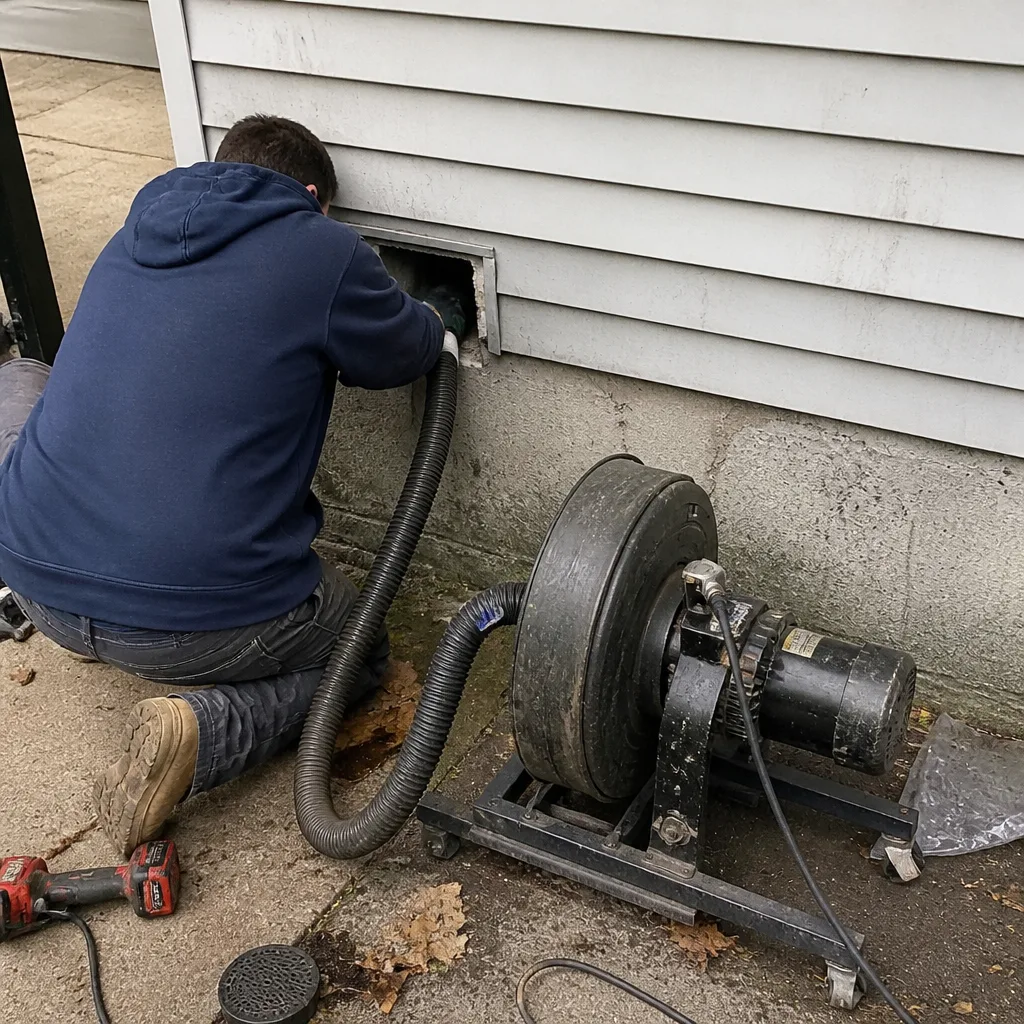 Before
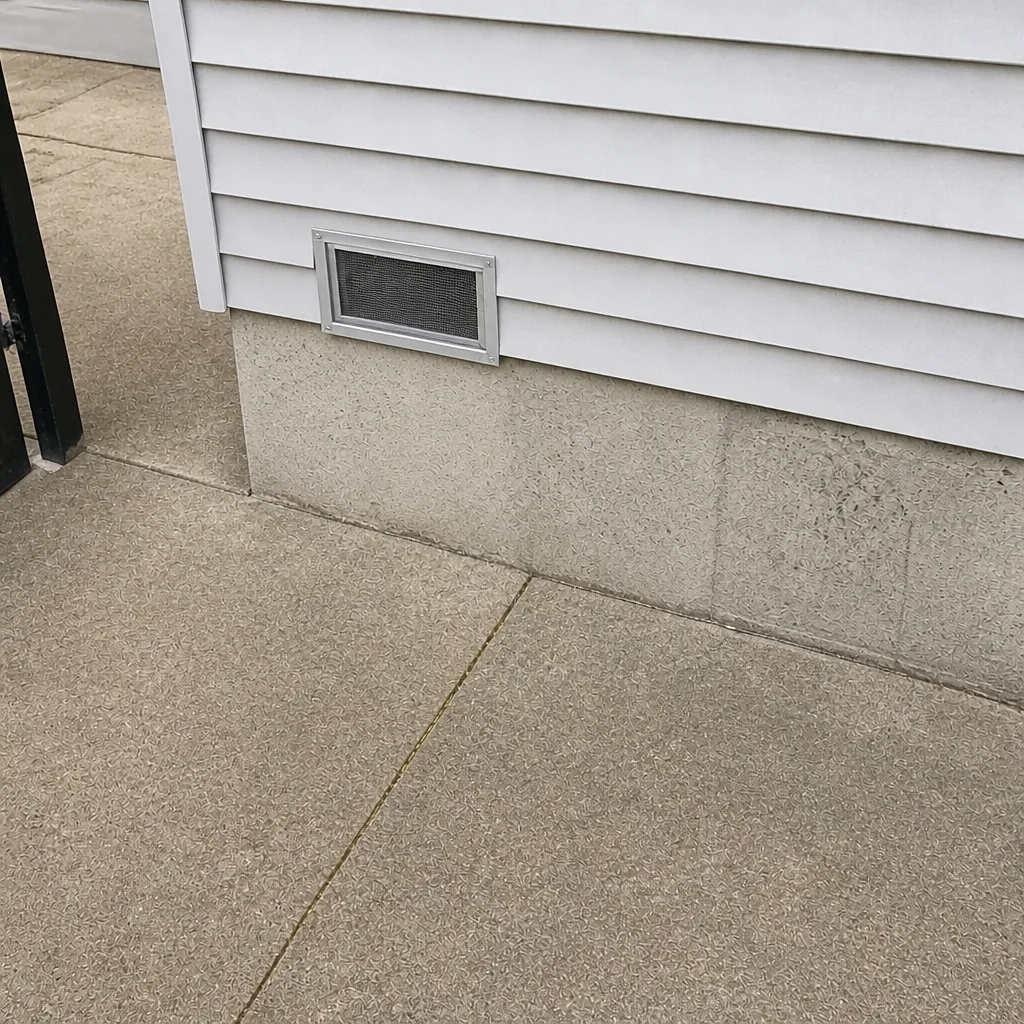 After
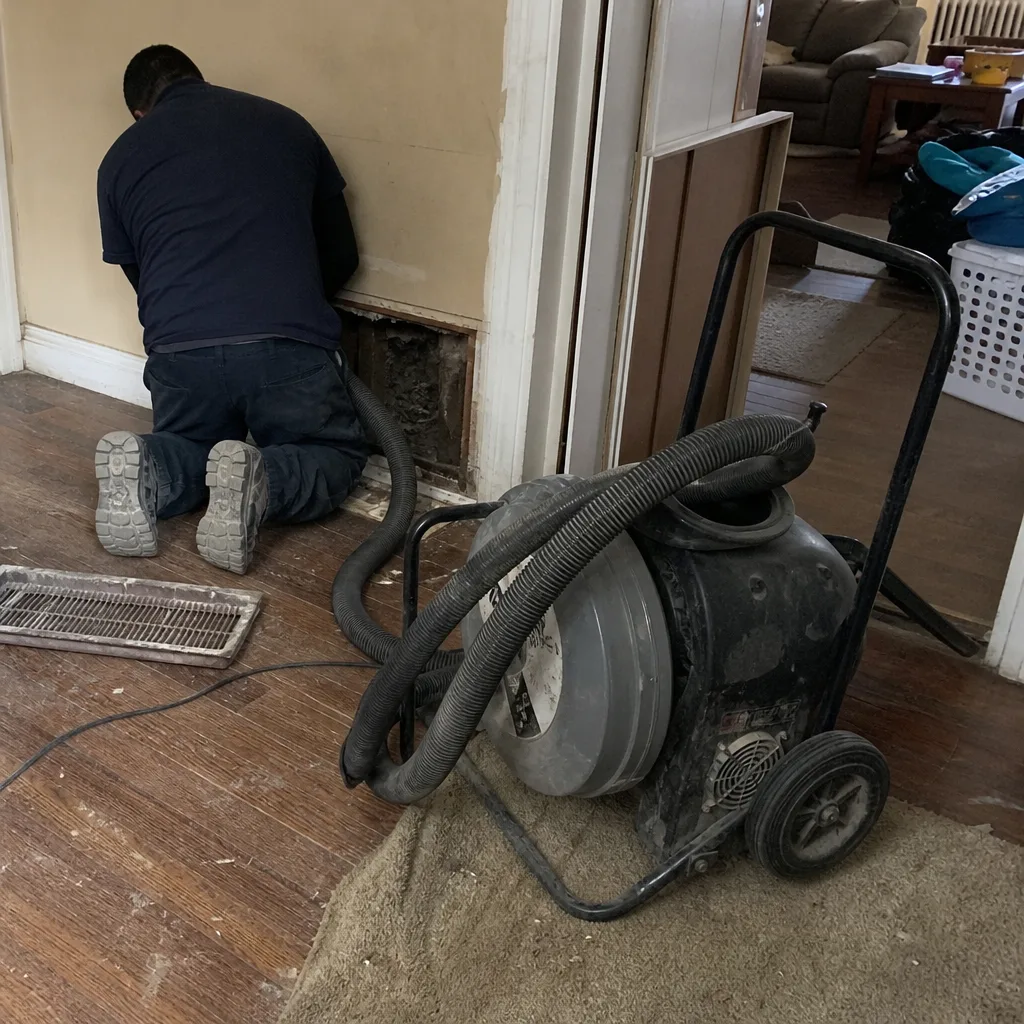 Before
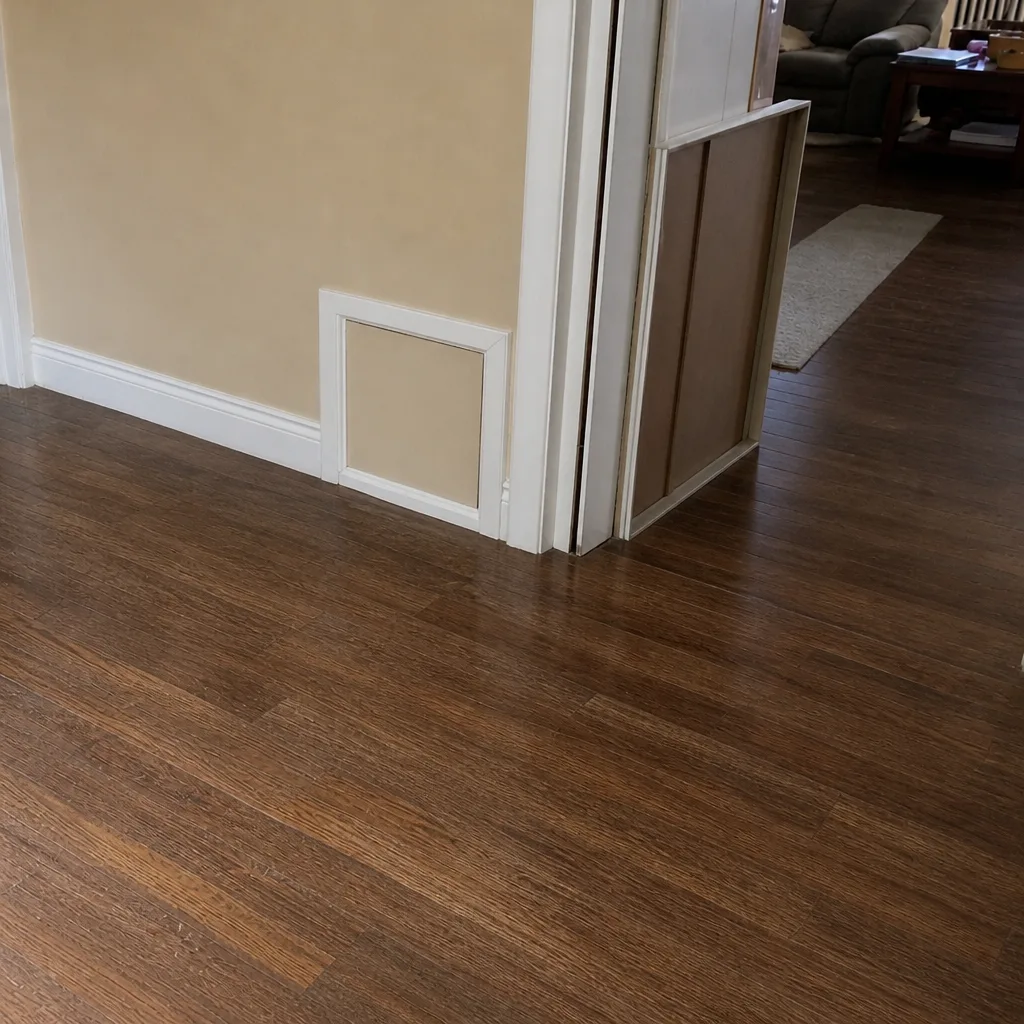 After
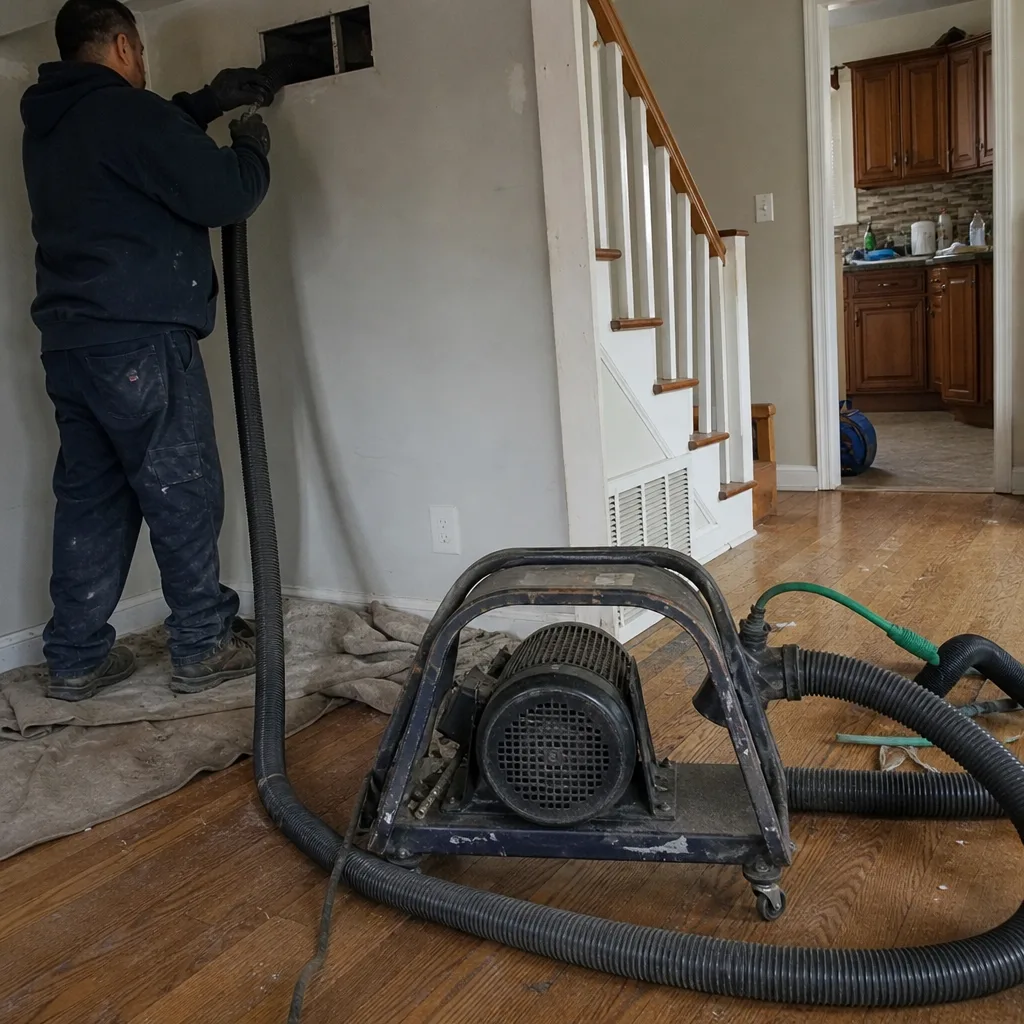 Before
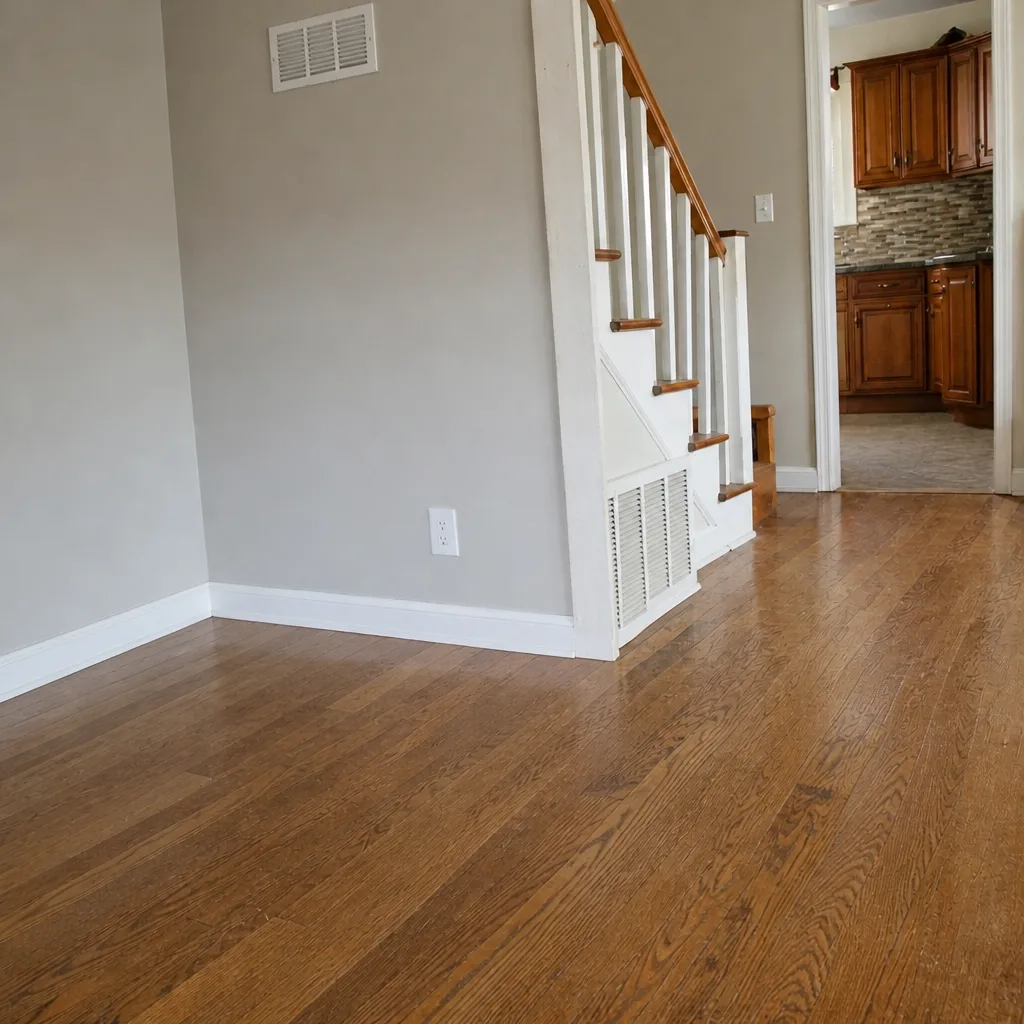 After
When to Call a Professional
Call a professional duct specialist when any of these is true in your Williamsbridge home: musty odor appears whenever the system runs, visible dust plumes at registers won’t go away, you see gaps or failing tape at duct joints, rust staining appears at registers or ceiling boots, the dryer is taking two cycles to dry a load, or uneven room temperatures have persisted through two seasons of thermostat adjustments. These are duct-side problems, and they will not improve with filter changes or HVAC tune-ups. A professional inspection confirms whether the issue is cleaning, sealing, sanitizing or HVAC-side work – and it should always give you a written estimate before any work starts, so you know exactly what you’re paying for.
Air Duct Cleaning Williamsbridge offers free estimates in Williamsbridge. Call (844) 443-3861. We answer 24/7. Fast dispatch from 7am to 7pm, Sunday through Friday. The local pro we connect you with is licensed and insured as their state requires.
Frequently Asked Questions
Filter changes handle particulate load at the air handler, but they can’t reach debris that’s settled inside the supply trunk or return duct. If you’re in Williamsbridge and seeing visible dust plumes at registers, musty odors only when the HVAC runs, black rings around ceiling boots, or dust accumulating faster than normal, the duct pathway needs attention, not a filter. Filter changes are maintenance; duct cleaning is remediation. Call (844) 443-3861 for an exact quote – estimates are free.
Cheap quotes usually cover one pass with consumer-grade equipment, no supply-side work, no sanitizing, and no photos – which is a fundamentally different service than a full-system clean. A quick shop-vac pass removes surface dust but not the debris that’s bonded to duct walls, and it leaves any biological growth or leaks untouched. Ask every company the same four questions: what’s covered, what equipment is used, will you provide before-and-after photos, and is the price whole-system or per-vent. Call (844) 443-3861 for an honest whole-system range and a written estimate before any work begins.
Duet duct cleaning pricing depends on square footage, system layout, number of returns, and whether sealing or sanitizing is included. In Williamsbridge, older homes with retrofitted systems often require more access work than newer construction, which affects the estimate. The written estimate sets the final price, and every quote covers the entire job – not a base rate plus add-ons. Call (844) 443-3861 for a free estimate specific to your home.
Most homes need a full duct cleaning every three to five years, but that answer only works as a baseline. Homes with pets, smokers, recent renovation work, or a history of moisture issues need it more often. Williamsbridge homes with older ductwork and basement returns often benefit from a sealing check before the heating season; catching leaks early is cheaper than cleaning more often. Call (844) 443-3861 to talk through your home’s specifics.
Ask for before-and-after photos of the actual duct interior in your home, taken during the visit. A professional clean includes removing every register, camera inspection where accessible, and photo documentation. If a technician can’t show you the duct interior before and after, the work probably didn’t happen the way it was described. Every visit we’re part of includes photo documentation as standard. Call (844) 443-3861 for an exact quote – estimates are free.
If you’re not noticing any symptoms, there’s usually no need to schedule duct work right away – monitor instead. A yearly look at the registers for dust streaks, rust staining and black rings catches problems before they escalate, and that’s the cheapest form of duct maintenance. If you want an inspection just to confirm the system is in good shape, or if you’re closing on a Williamsbridge home and want to know what you’re buying, call (844) 443-3861. Free estimates, and we’ll tell you straight if nothing needs doing.
The Bottom Line
Most duct problems announce themselves long before they cause a system failure. Uneven airflow, musty odors when the HVAC runs, black rings around ceiling boots, and rust staining are all notices that the air pathway is degrading. The key skill is separating duct symptoms from air handler symptoms and knowing when to monitor versus book an inspection versus treat something as urgent. In Williamsbridge’s older housing stock, the signs are amplified by retrofit ductwork, basement returns, and decades of seal failure, which makes reading them accurately more valuable than in a newer home. In our experience, homeowners who catch the signals early spend less on remediation. Call (844) 443-3861 for a free estimate. We answer 24/7. Fast dispatch from 7am to 7pm, Sunday through Friday.
Written by the team at Air Duct Cleaning Williamsbridge.