
Last updated November 22, 2026
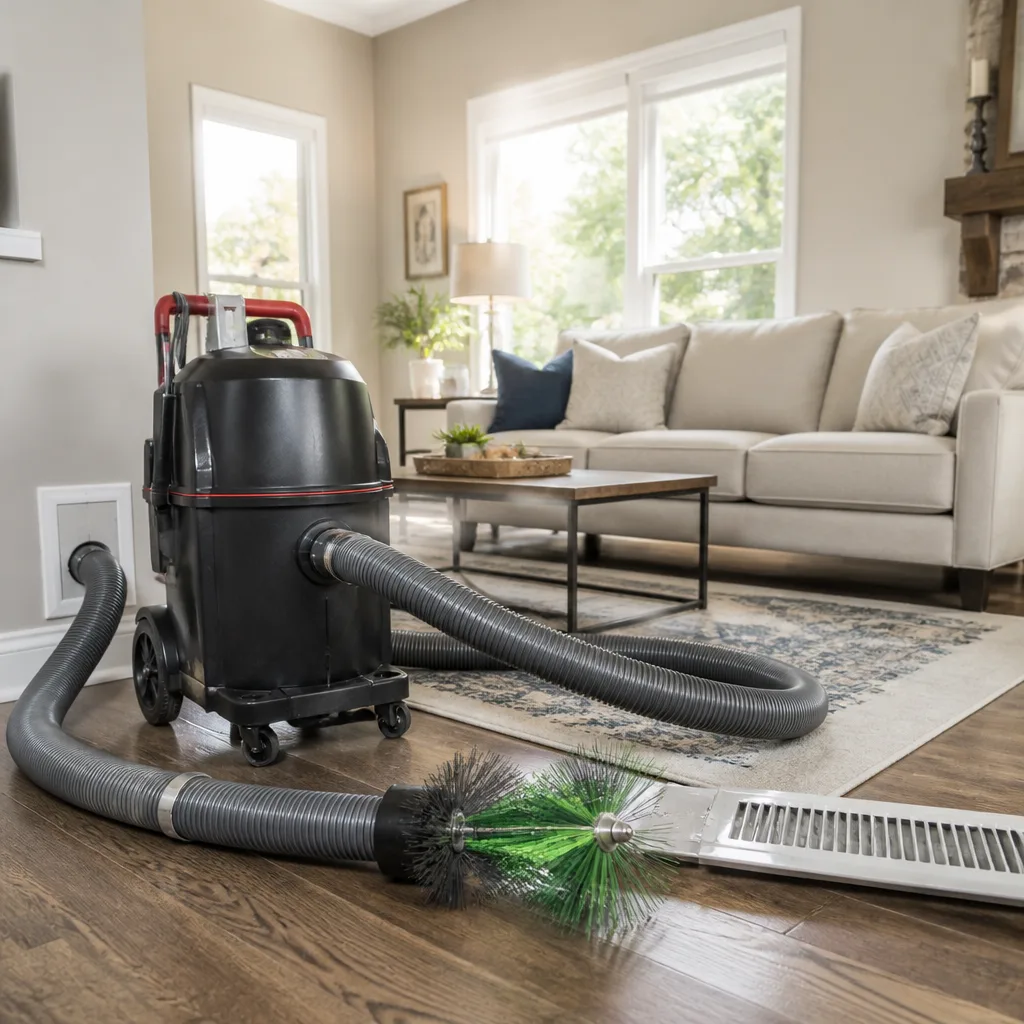 Whole-home duct cleaning
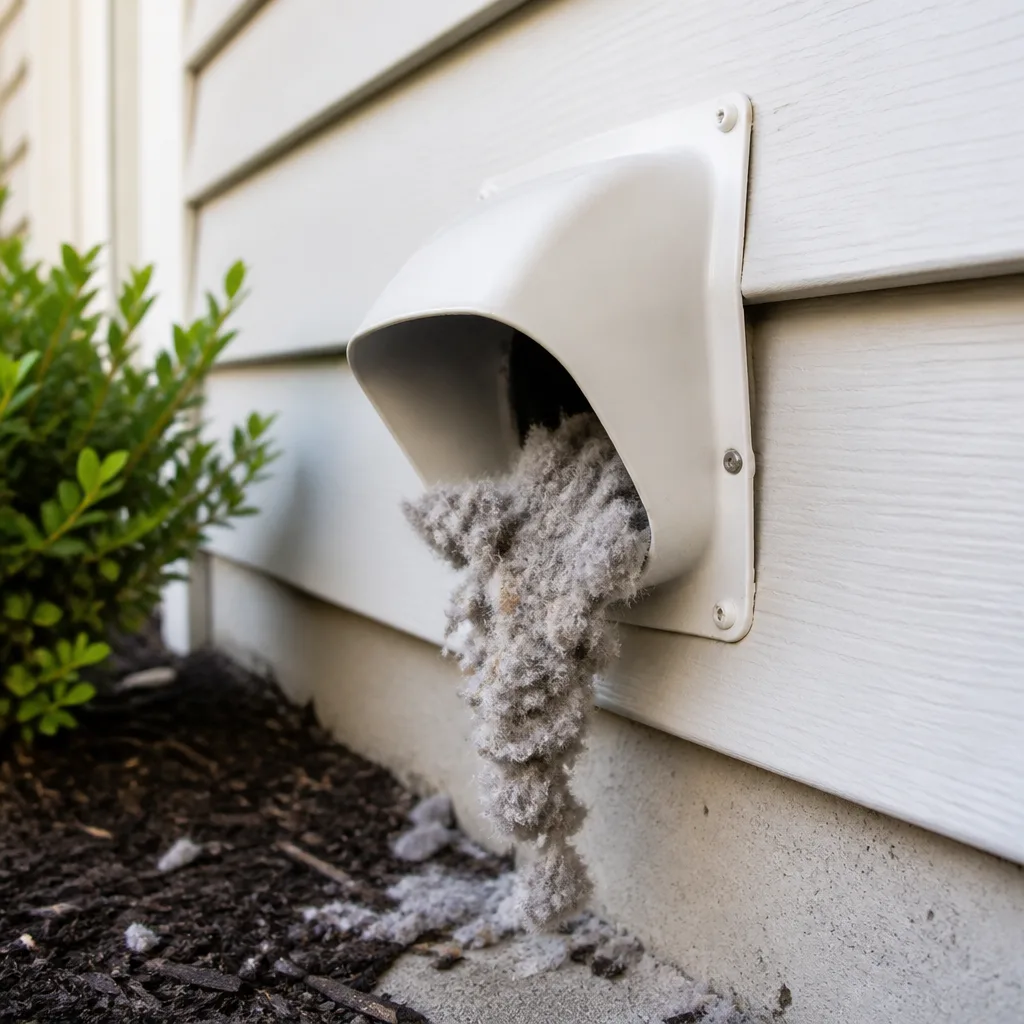 Dryer vent cleaning
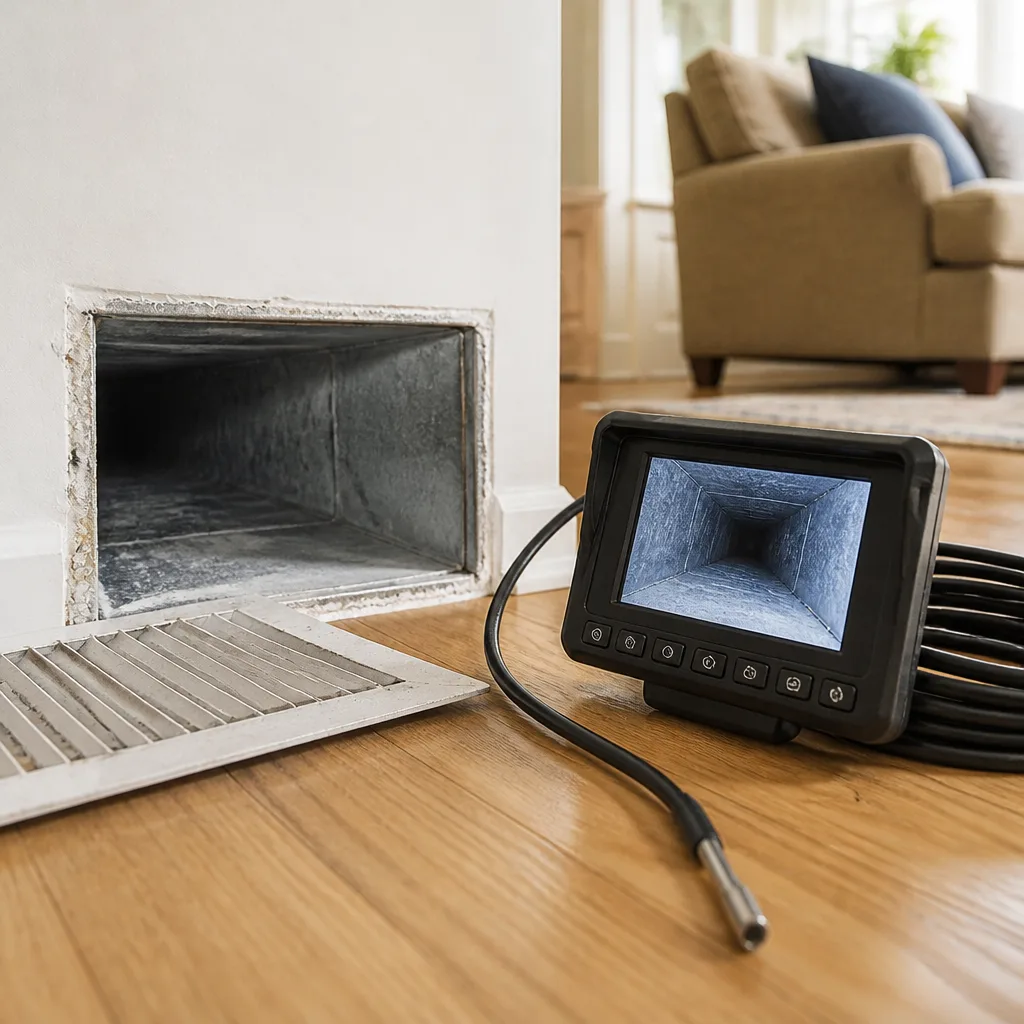 Camera inspection
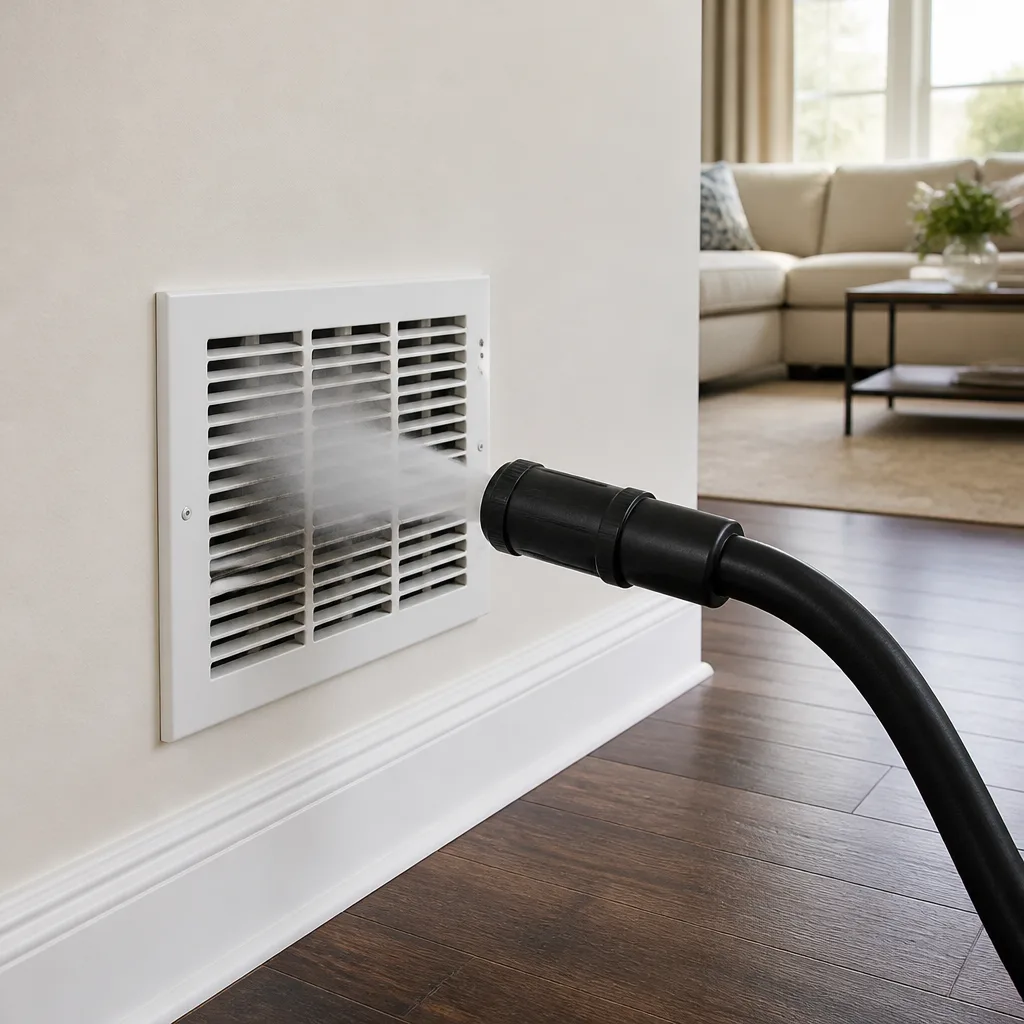 Sanitizing & deodorizing
Whole-system duct and dryer vent check with before-and-after photos - you see exactly what came out of your vents
That "$99 whole-house special" is a bait ad - the real number appears once they are in your hallway, or the "clean" is a shop-vac at the register. We photograph the inside of your ducts before and after instead.
DIY vs Professional Air Duct Cleaning: The Williamsbridge Homeowner’s Decision Guide
Running a household vacuum into your supply registers without negative pressure on the return side is the duct-cleaning equivalent of sweeping dust off a shelf without a dustpan. You aren’t removing the problem, you’re relocating it into your airstream. That single image explains why so much DIY duct cleaning in Williamsbridge ends with dustier rooms, not cleaner air. This guide draws the honest line: what a homeowner can genuinely accomplish with consumer tools, where that work stops being helpful, and which system conditions turn DIY from a waste of effort into a real hazard. By the end you’ll have a four-variable framework for deciding whether your Williamsbridge home needs a homeowner or a professional on the job.
Quick Answer
Homeowners can safely handle register and grille cleaning, phone-camera visual inspections, and clearing the lint screen slot on their dryer vent. Anything beyond that – deep duct cleaning, sanitizing, sealed diagnostics, HVAC coil work – requires negative-pressure containment and commercial-grade equipment that no consumer vacuum can replicate. If your Williamsbridge home is pre-1980, has never had a professional clean, or houses pets or allergy-sensitive occupants, DIY maintenance is not the right call.
Styles & brands we work with
- Whole-home duct cleaning
- Dryer vent cleaning
- Camera inspection
- Sanitizing & deodorizing
Table of Contents
- Why DIY Duct Cleaning Isn’t Just Weaker: It Can Make Things Worse
- What You Can Actually Do With Consumer Tools
- The Physics of Negative Pressure: Why Your Vacuum Can’t Do This
- The Three DIY Scenarios That Create Professional-Grade Problems
- Where DIY Turns Hazardous in Williamsbridge Homes
- Your Four-Variable Decision Matrix
- What Professional Air Duct Cleaning Costs in Williamsbridge
- Common Mistakes to Avoid
- When to Call a Professional
- Frequently Asked Questions
Why DIY Duct Cleaning Isn’t Just Weaker: It Can Make Things Worse
The instinct behind DIY duct cleaning is reasonable: if I can clean my floors and my filters, why not the ducts? The answer lives in what happens to settled contamination when it’s disturbed. Duct contamination isn’t cosmetic – it’s a reservoir of dust, hair, skin cells, pet dander, and sometimes mold spores resting in a stable layer along the duct floor and on the interior surfaces. Disturbing that layer without capturing it puts the material into the airstream. Your HVAC system then moves it into every room of the house.
This is where the “at least I’m trying” logic breaks. A homeowner with a shop vac treating the supply registers in a Williamsbridge apartment or single-family home isn’t running a cleaning process; they’re running an aerosolization process. The result isn’t cleaner air – it’s elevated particulate for hours, sometimes days, as the disturbed material keeps cycling through the return.
The professional approach reorders that. Agitation (brushing or air whipping the interior of the duct) always happens while a negative-pressure vacuum is running at the same time, so the material being loosened is being captured at the moment it lifts. In our experience, the single biggest difference between a professional clean and a homeowner attempt is not the tool – it’s whether agitation and capture happen simultaneously or separately.
For a Williamsbridge homeowner with moderate visible dust and no allergy concerns, that difference may not feel urgent. For a home with pets, a family member with asthma, an elderly occupant, or a fuel-burning appliance downstream of the ducts, it’s the whole game.
What You Can Actually Do With Consumer Tools
There’s a real middle ground. Several duct-adjacent tasks are safely and genuinely within reach for a homeowner with basic tools and common sense. Knowing exactly which tasks those are – and what each one accomplishes – is the foundation of a good DIY maintenance habit.
Task 1: Register and Grille Cleaning
Removing the metal grille and wiping the face of the register with a damp cloth removes visible surface dust and grime. This improves the appearance of the room and reduces the material that would otherwise get re-entrained into the airstream. What it doesn’t do is touch the duct interior beyond the first few inches, where most of the settled contamination sits. Think of it as cleaning the doorway, not the room.
Task 2: Phone-Camera Visual Inspection
A phone with a light can be dropped through a register opening or a removed grille to see the first several feet of the duct interior. This is genuinely useful for understanding the state of your system. What you’re looking for: visible dust matting on the duct walls, dark or musty staining, damp patches, insect or rodent signs, and any loose materials. Photograph what you find – it helps a professional assess the system faster if you end up calling one.
Task 3: Dryer Vent Lint Trap Clearing
Clearing the lint screen slot in the dryer itself, and wiping visible lint from the accessible segment behind the dryer with a vacuum hose extension, is a legitimate homeowner task. The lint that builds up inside the long run of the vent duct – especially where it elbows or exits the building – is not. That’s where the fire risk concentrates. Professional dryer vent cleaning clears that full run in about thirty minutes, which is why we treat it as a core service rather than an add-on.
What These Three Tasks Do Not Accomplish
- Bulk removal of settled dust from the main trunk lines
- Cleaning the supply branch runs beyond the first section
- Sanitizing or reducing microbial growth on duct surfaces
- Clearing the dryer vent run or verifying airflow through it
- Cleaning cooling coils or the air handler interior
- Sealing leaks or repairing disconnected or crushed duct sections
Those tasks require tools and containment a homeowner doesn’t have. They happen in the other 5% of the system the register-cleaning habit can’t reach.
The Physics of Negative Pressure: Why Your Vacuum Can’t Do This
The mechanic that makes professional duct cleaning work isn’t the vacuum’s suction rating on the box. It’s negative-pressure containment: a commercial-grade machine connected to the system pulls the entire duct network into a slight vacuum, so every loosened particle moves toward the vacuum rather than into the room. That’s the whole operating principle, and it can’t be replicated with a consumer tool.
CFM Requirements
Source removal in a residential duct system requires air movement measured in the hundreds to thousands of cubic feet per minute, sustained across the entire duct network. A shop vac pulls a fraction of that, concentrated at a single nozzle. The difference isn’t a matter of degree – it’s a different category of machine. The professional equipment we deploy from Rotobrush and Nikro is designed exactly for this. These are the same class of systems used in professional restoration work.
Containment Mechanics
Effective negative pressure requires sealing the system at registers and at the air handler so the vacuum can pull evenly from all branches. Without that sealing, the vacuum pulls air from the nearest opening and bypasses the rest of the system entirely. A homeowner trying this at home can’t create the seal. Even with a great shop vac and enormous patience, the physics won’t cooperate.
Why Agitation Without Capture Worsens Air Quality
Agitation (brushing, air whipping, contact cleaning) is what liberates settled material from duct surfaces. Capture is what removes it. Do those simultaneously and the duct gets cleaner. Do only the agitation, and you’ve aerosolized the contamination into your living space. That’s the mechanism behind the “sweeping without a dustpan” problem. Every brushing action without a running capture system moves dust into the airstream. Some of it settles back into the ducts; some of it stays airborne for hours.
We’ve seen the aftermath of this in Williamsbridge homes – register-cleaning attempts followed by a sudden uptick in everything that settles on furniture and window sills. The good news is that a proper professional clean resets the system cleanly. The reminder here is that doing it halfway is often worse than leaving it alone.
The Three DIY Scenarios That Create Professional-Grade Problems
Most DIY duct cleaning stays harmless and futile. Three specific approaches cross the line from ineffective to actively damaging. If you’ve tried any of these on your Williamsbridge home, it’s worth a professional look before you consider the system clean.
- Using a leaf blower to “clear” the ducts. This is the worst version of the agitation-without-capture problem. A leaf blower pushes hundreds of CFM of unfiltered air through the duct system, liberating settled dust and pushing it out of every register in the house at once. It also risks pressurizing the duct system beyond what it’s designed for, and can dislodge poorly sealed joints. The visible result is a dust cloud; the invisible result is contamination blown into every room and coating of the air handler components.
- Applying bleach spray to registers without airflow control. Bleach-containing sprays introduced into a running HVAC system can corrode the coil, damage flex duct interior liners, and – if it reaches the air handler – leave chemical residue in every room. Bleach also doesn’t remove contamination; it just discolors or partially disinfects what’s visible while leaving the layer underneath intact. The professional approach to biological concerns is a proper sanitizing process, not a spray bottle of household product.
- Pulling flex duct apart to “inspect” it. Flex duct connections at plenums and junctions are sealed and taped for a reason. Opening them lets a homeowner see inside, but it also breaks the seal, disturbs the insulation layer, and can put a kink or sag into a run that was properly hung. The result is typically a leakier, less efficient system than before. A phone-camera inspection accomplishes the same thing without accessing the seal.
The pattern worth noticing: each of these scenarios produces a problem that’s harder to fix than the original contamination. DIY duct cleaning that stays in the safe zone (register cleaning, camera inspection) is fine. DIY that crosses outside it creates new work.
Where DIY Turns Hazardous in Williamsbridge Homes
Some duct-cleaning attempts are ineffective. A smaller set are actually dangerous, and those risks cluster in older homes and around particular materials. Williamsbridge has plenty of both – the neighborhood runs across pre-war apartment buildings, mid-century single-family homes, and everything in between.
Pre-1980 Duct Systems and Fiber Disturbance
If your Williamsbridge home predates 1980, the duct system may run adjacent to or through insulation that contains asbestos fiber. Duct brushing, air whipping, or aggressive vacuuming through a register can disturb that fiber into the airstream. That’s a health risk no homeowner should take on casually. If you suspect pre-1980 construction and are considering any duct work, ask about the insulation materials before starting – and treat professional inspection as a baseline requirement, not an upgrade.
Flex Duct and Physical Damage Risk
Flex duct is thin, lightweight, and easily crushed or torn by tools that weren’t designed for duct interiors. A homeowner reaching into a flex run with a shop vac nozzle or attempting to “sweep it out” with a broom handle can crush the interior liner, permanently reducing airflow to that register. Professional agitation uses tools designed for exactly this contact; consumer tools aren’t.
Downstream Combustion Appliances
If your Williamsbridge home has a fuel-burning appliance (gas furnace, gas water heater, or boiler) in the same utility closet or basement as the air handler, duct work around the flue and combustion air openings needs to be handled with care. Disturbed duct sealing in that area can affect draft and combustion air balance. This is one of those cases where the safest rule is don’t touch it – call a professional.
Mold and Microbial Contamination
If the phone-camera inspection reveals dark staining, musty odors, or visible mold growth inside the ducts, DIY cleaning is the wrong approach. Applying household cleaners to microbial contamination inside a duct system can make it worse before it makes it better. Professional cleaning, sanitizing with properly rated products (like the Abatement Technologies systems we use), and in severe cases a moisture-source fix come first.
Your Four-Variable Decision Matrix
We’ve reduced the “should I DIY or call a professional” question to four variables. Assess your Williamsbridge home against each; two or more red flags mean professional service is the right call.
Variable 1: System Age
- Under 15 years, well-maintained: DIY maintenance is appropriate for surface register care.
- 15-40 years with no documented cleaning: professional cleaning is a good baseline first step.
- Pre-1980 with original or unknown-age ductwork: professional inspection is the starting point, not DIY.
Variable 2: Last Professional Clean Interval
- Cleaned in the last 3-5 years: DIY register maintenance is plenty.
- Never cleaned or more than 5 years ago: professional cleaning is due – the register layer isn’t the issue anywhere in the system.
- Unknown history (new home purchase): professional inspection + cleaning establishes a baseline.
Variable 3: Pets and Allergen-Sensitive Occupants
- No pets, no respiratory concerns: DIY maintenance stays in the safe zone.
- Pets (especially multiple or long-haired) OR a household member with asthma, allergies, or immune concerns: professional service is worth it, because aerosolized contamination that a DIY attempt creates has real health cost for sensitive occupants.
Variable 4: Visible Contamination Type
- Light dust and normal debris: DIY register care is fine.
- Heavy matted dust, visible mold, pest evidence, or musty odor: professional service is required.
- Dryer vent lint buildup beyond the dryer: professional dryer vent cleaning is required regardless of other variables.
Scoring it: 0-1 red flags means DIY maintenance is a reasonable starting point. 2-3 red flags mean get a professional clean and establish a maintenance interval. 4 red flags mean treat it as urgent, especially if any of them involve visible mold or combustion-appliance adjacency.
What Professional Air Duct Cleaning Costs in Williamsbridge
Duct cleaning in this market is priced per system, not per vent. A typical whole-home air duct cleaning for a Williamsbridge single-family home usually runs in the range of what most local providers quote for a full system, and the written estimate sets the final price. Here’s what the line items look like:
- Standard whole-home air duct cleaning: priced per system, based on number of registers and runs
- Dryer vent cleaning: quoted separately, usually a simple fixed scope
- HVAC cleaning (coils + air handler): quoted with the duct work, based on unit type and accessibility
- Duct repair and sealing: quoted per job, based on the specific runs needing attention
- Air quality and sanitizing: quoted by scope, based on system size
This industry has a bait-and-switch reputation for a reason: low coupon prices that balloon once the technician is on site. The alternative is one flat price per system, agreed before any work starts, with before-and-after photos of your own ducts provided so you can see what was actually removed. That’s the standard we operate on. If a quote you’re considering doesn’t hold to it, that’s a signal to walk away.
For comparison: a shop vac and a few hours of homeowner work costs a household almost nothing, and it does reduce visible dust on the surfaces that matter most for appearance. What it doesn’t do is change the condition of the system interior, and it doesn’t come with before-and-after photos of what’s inside. The real trade-off for most Williamsbridge homes is appearance maintenance versus actual system cleaning – not a cost comparison at all.
For an exact quote on your system, call (844) 443-3861 for a free estimate. We answer 24/7, with fast dispatch from 7am to 7pm, Sunday through Friday.
Common Mistakes to Avoid
- Reaching past the register with a shop vac. It feels productive, but it agitates dust without capturing it. The register covers the first few inches of the duct; the contamination is 8-15 feet in.
- Assuming a “cleaned” system is actually clean. If a contractor doesn’t show before-and-after photos of the interior, the claim can’t be verified. Ask for photos before-and-after, or walk away. This matters in every Williamsbridge borough apartment as much as in a single-family home.
- Using chemicals on duct interiors without rating clarity. Household bleach and general-purpose cleaners aren’t designed for duct interiors. Some can damage flex liner; some leave residue that cycles through the house for weeks. Only use products rated for ductwork.
- Skipping the dryer vent because the duct cleaning is scheduled. These are separate services with separate risks. The dryer vent fire hazard is the highest-stakes single issue in this whole guide – and it’s not cleaned as an afterthought during air duct work.
- Pulling flex duct apart for inspection. Phone cameras can see inside without breaking the seal. If you need to know what’s inside, drop the phone through a register opening – not through a duct joint.
- Ignoring the musty smell. A persistent musty odor from a register is telling you something the eye can’t see – likely moisture and microbial growth inside the duct or air handler. That’s a professional-diagnosis situation, not a homeowner one.
- Treating all “cheap” quotes as equal. A quote that’s a fraction of the local range is almost always covering less work than it claims – fewer runs cleaned, no sanitizing, no photos. Cheap is expensive here.
When to Call a Professional
Call a professional if any of the following apply in your Williamsbridge home: pre-1980 construction with original or unknown-age ductwork; visible mold or dark staining inside the ducts; a persistent musty odor from any register; multiple pets or a household member with asthma, allergies, or immune concerns; dryer vent lint buildup beyond the visible level; a planned home sale or renovation that will involve the HVAC system; or more than five years since the last documented cleaning.
A professional clean is also the right first step for a newly purchased home where the duct history is unknown. It establishes a baseline you can maintain from. For everything below that line – register cleaning, camera inspection, lint trap clearing – a homeowner is doing real work.
Air Duct Cleaning Williamsbridge offers free estimates in Williamsbridge. We use Rotobrush and Nikro equipment for whole-system cleaning, plus Honeywell and Aprilaire filtration solutions for air quality work. Call (844) 443-3861. We answer 24/7. Fast dispatch from 7am to 7pm, Sunday through Friday. The local pros we connect you with are licensed and insured as their state requires.
Frequently Asked Questions
Air duct cleaning in Williamsbridge is priced per system, based on register count and system complexity, and the written estimate sets the final price. What matters more than the headline number is scope: whole-system clean, before-and-after photos, and a flat price agreed before work starts. Call (844) 443-3861 for an exact quote – estimates are free.
Cheap quotes usually cover a fraction of the work they seem to promise – fewer runs cleaned, no sanitizing, no documented photos, no dryer vent. The gap between a low teaser and the final invoice once a technician is on site is the industry’s bait-and-switch problem. Our answer is one flat price per system, agreed before any work starts. Call (844) 443-3861 for a free estimate.
Vacuuming registers removes surface dust and does improve appearance, but it doesn’t reach the settled contamination inside the duct runs. If a camera inspection shows only light dust and your system was professionally cleaned in the last few years, register vacuuming is fine. If the system is unknown or overdue, the register vacuum doesn’t touch the problem. Call (844) 443-3861 to talk through what makes sense for your system.
Ask for before-and-after photos of the duct interiors from the same inspection points. A professional clean should produce visible evidence of what came out. If a quote doesn’t include documented photos, that’s the simplest test of whether the work matches the invoice. Call (844) 443-3861 to schedule – estimates are free.
Every three to five years for a typical Williamsbridge home with normal dust and no pets. Shorten that interval to two to three years if you have pets, a household member with respiratory concerns, or recently completed a renovation. Skip it entirely only if the system has been professionally cleaned recently and no new issues have appeared. Call (844) 443-3861 for a free estimate and a recommended interval.
No physical difference – the physics of agitating dust without capture are the same any day. What’s different is the support available if something goes wrong: our dispatch runs Sunday through Friday, 7am to 7pm, and we are closed Saturday. Call (844) 443-3861 and we’ll book you into the next available slot.
No. A leaf blower pressurizes the duct system, liberates settled contamination, and pushes it into every room of the house without any capture system running. It’s the single most damaging DIY approach we hear about, and it can force a much larger cleanup. Call (844) 443-3861 if you’ve done this – a professional clean resets the system.
The Bottom Line
DIY duct cleaning has a real but narrow scope: register cleaning, phone-camera inspection, and lint trap clearing. Everything beyond that – deep cleaning, sanitizing, HVAC work, repair, dryer vent run clearing – needs negative-pressure containment and professional equipment. For any Williamsbridge home with visible contamination, mold, pets, allergen-sensitive occupants, or a system over five years past its last clean, the register-and-vacuum approach isn’t a maintenance habit – it’s a stopgap that ignores the actual problem. The four-variable matrix is worth bookmarking: system age, last clean interval, occupant sensitivities, and contamination type. Two red flags and it’s time for a professional clean.
For a free estimate on your Williamsbridge home, call (844) 443-3861. We answer 24/7. Fast dispatch from 7am to 7pm, Sunday through Friday. Our technicians have up to 13 years of experience, and the local pros we connect you with are licensed and insured as their state requires.
Written by the team at Air Duct Cleaning Williamsbridge.
See the difference
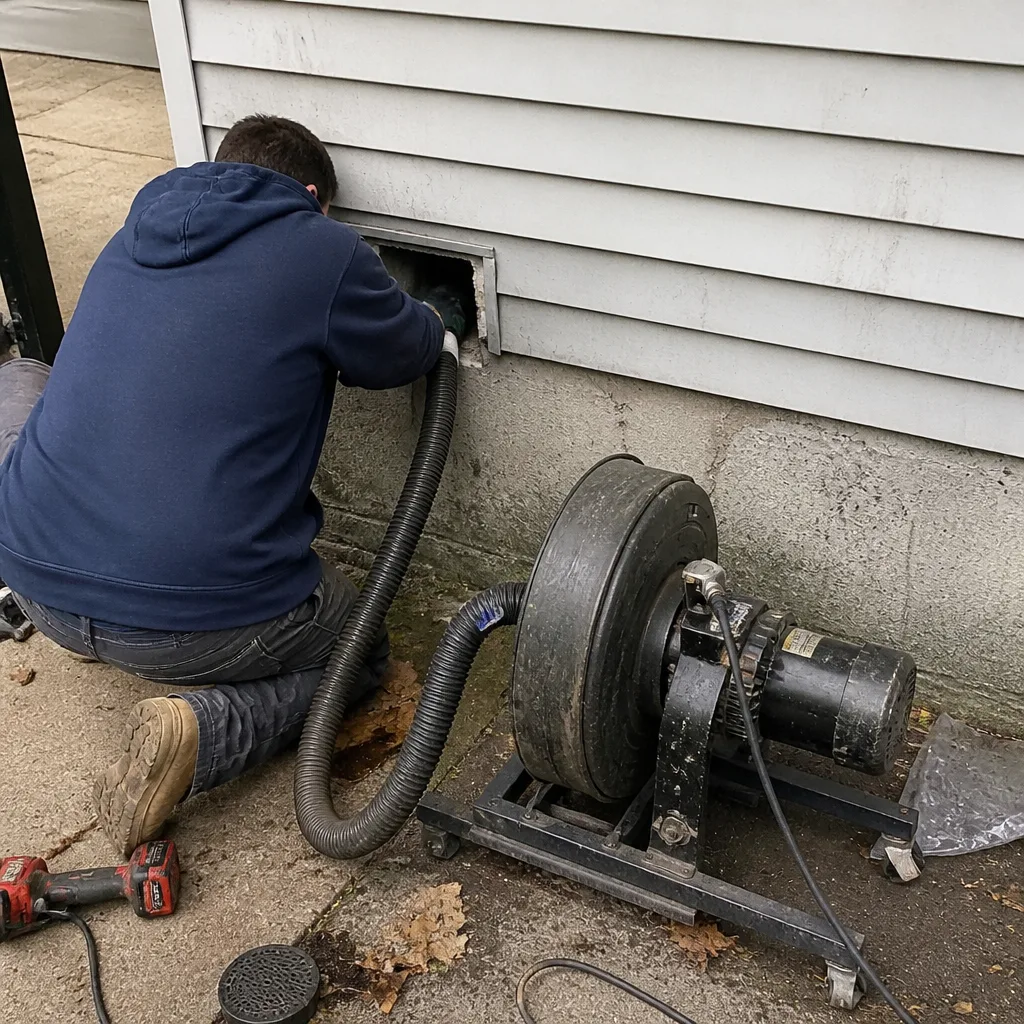 Before
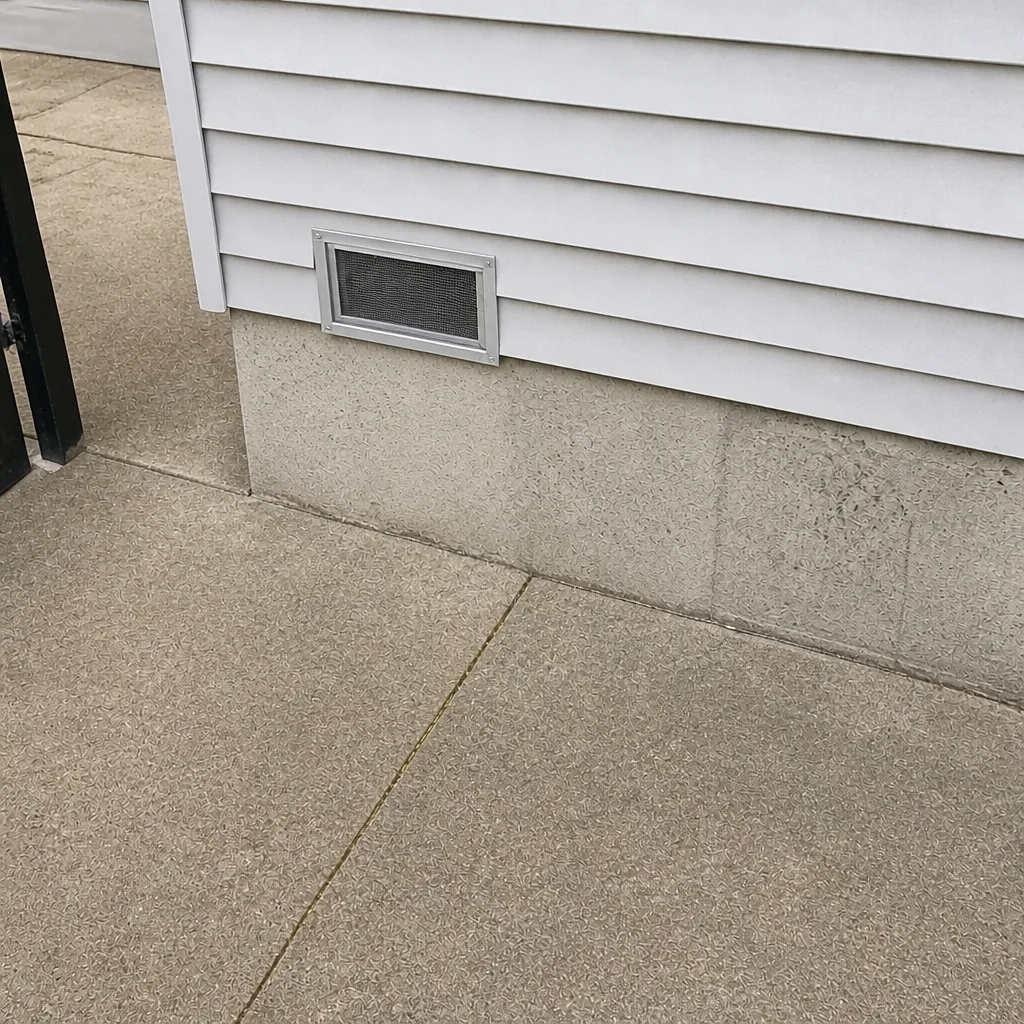 After
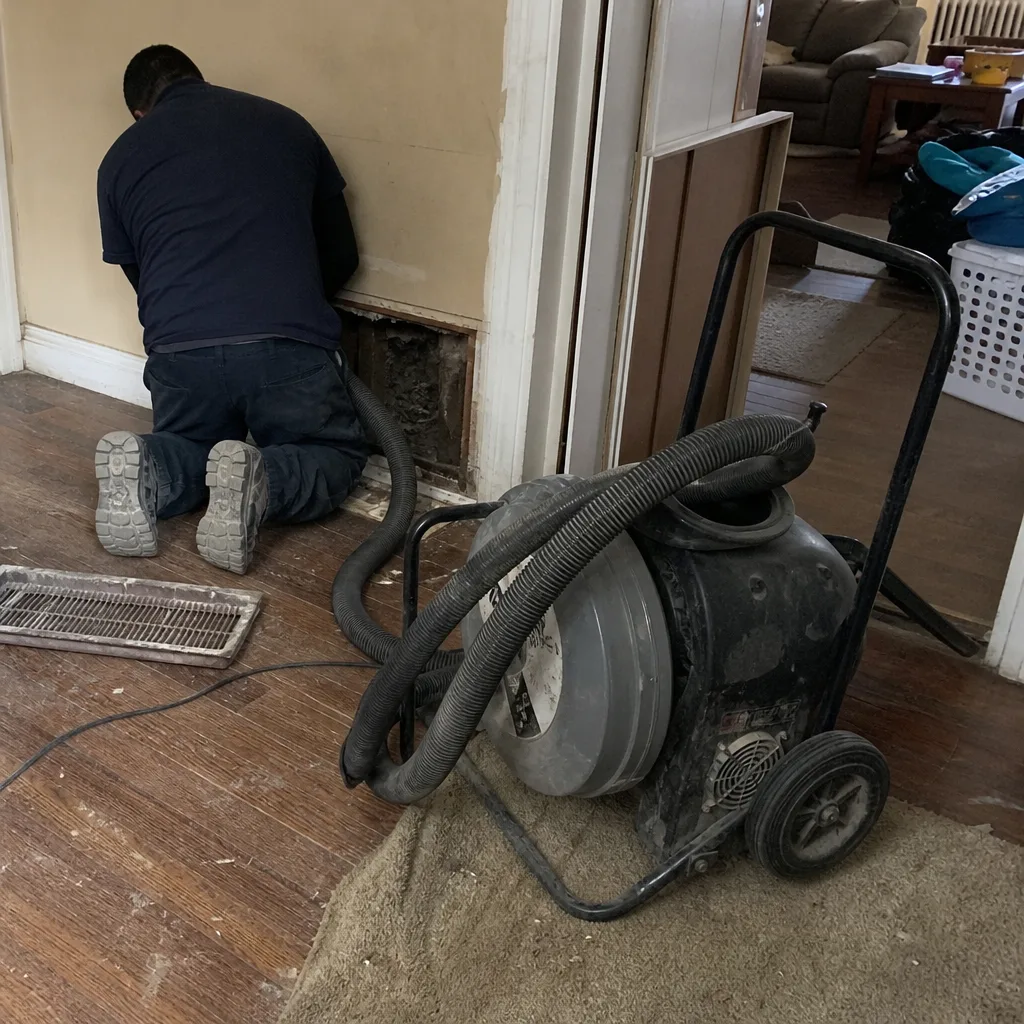 Before
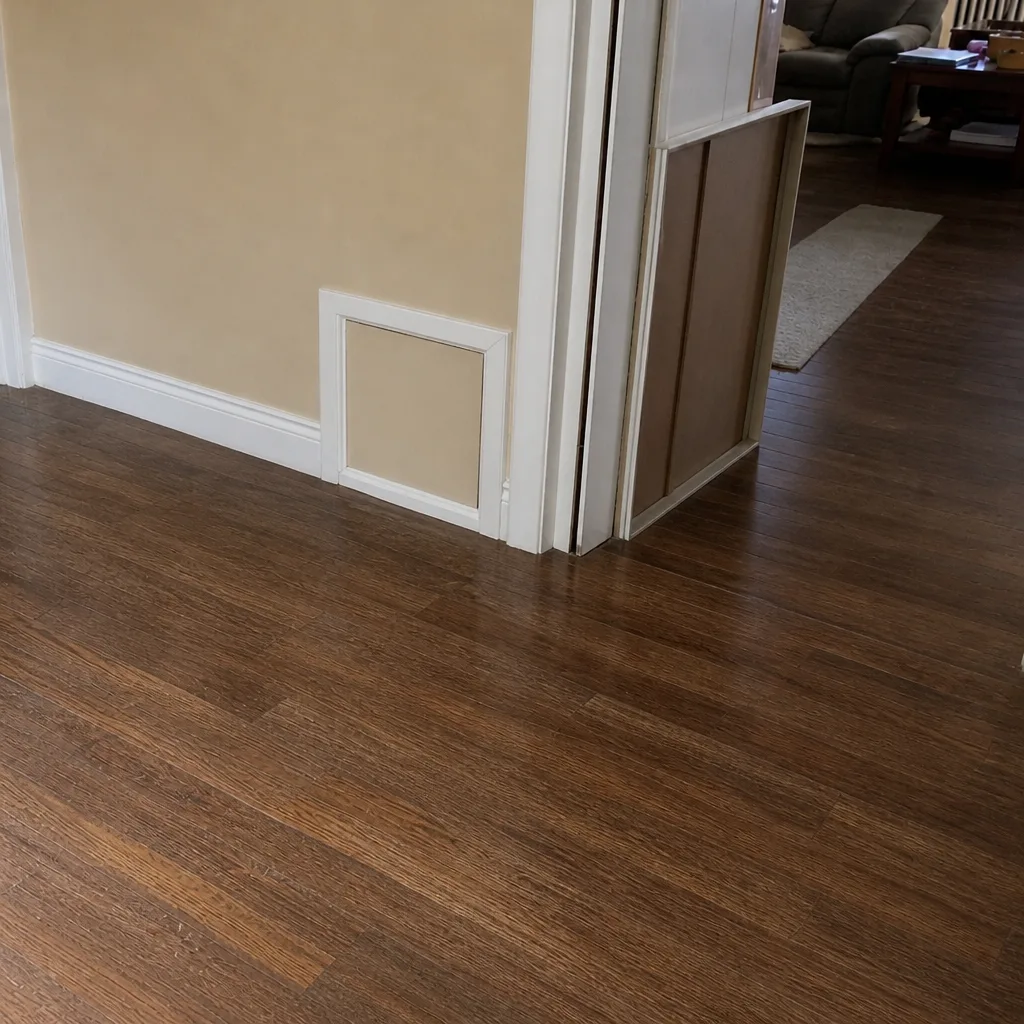 After
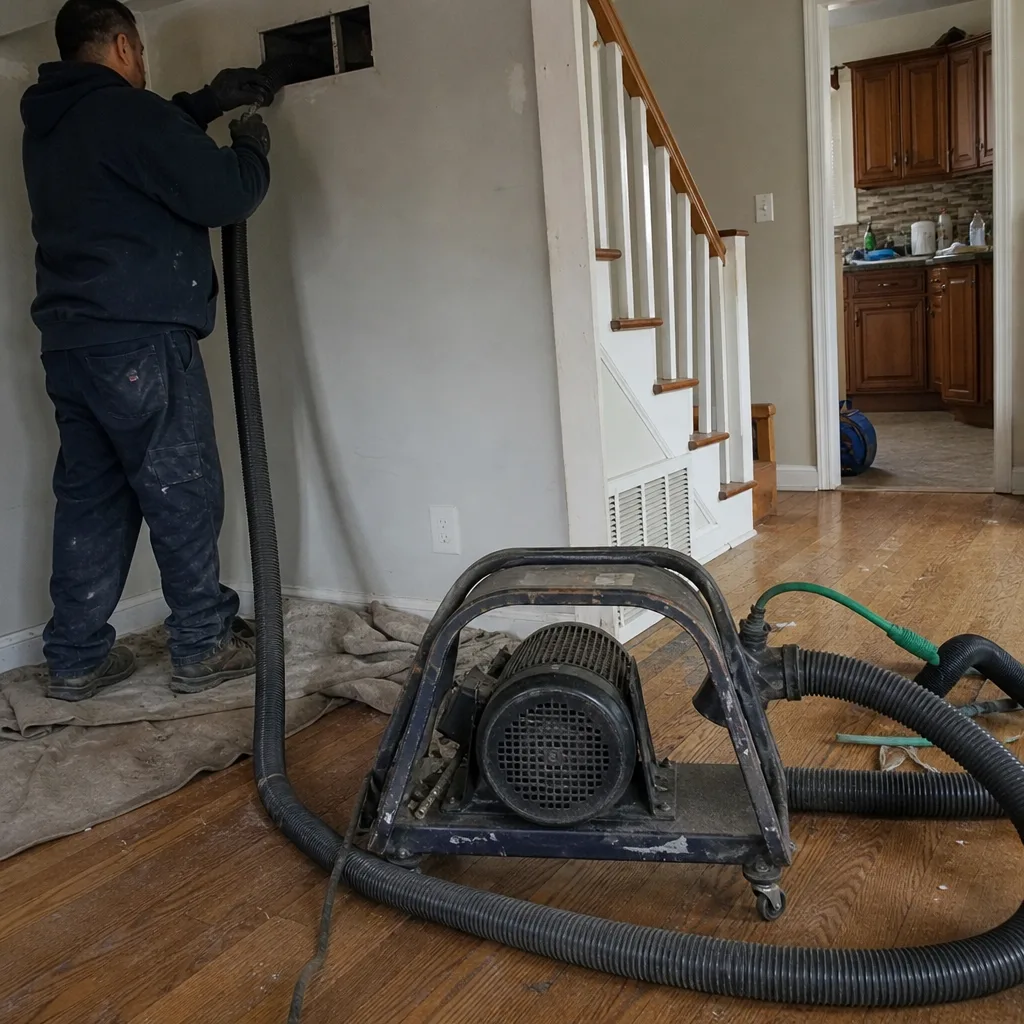 Before
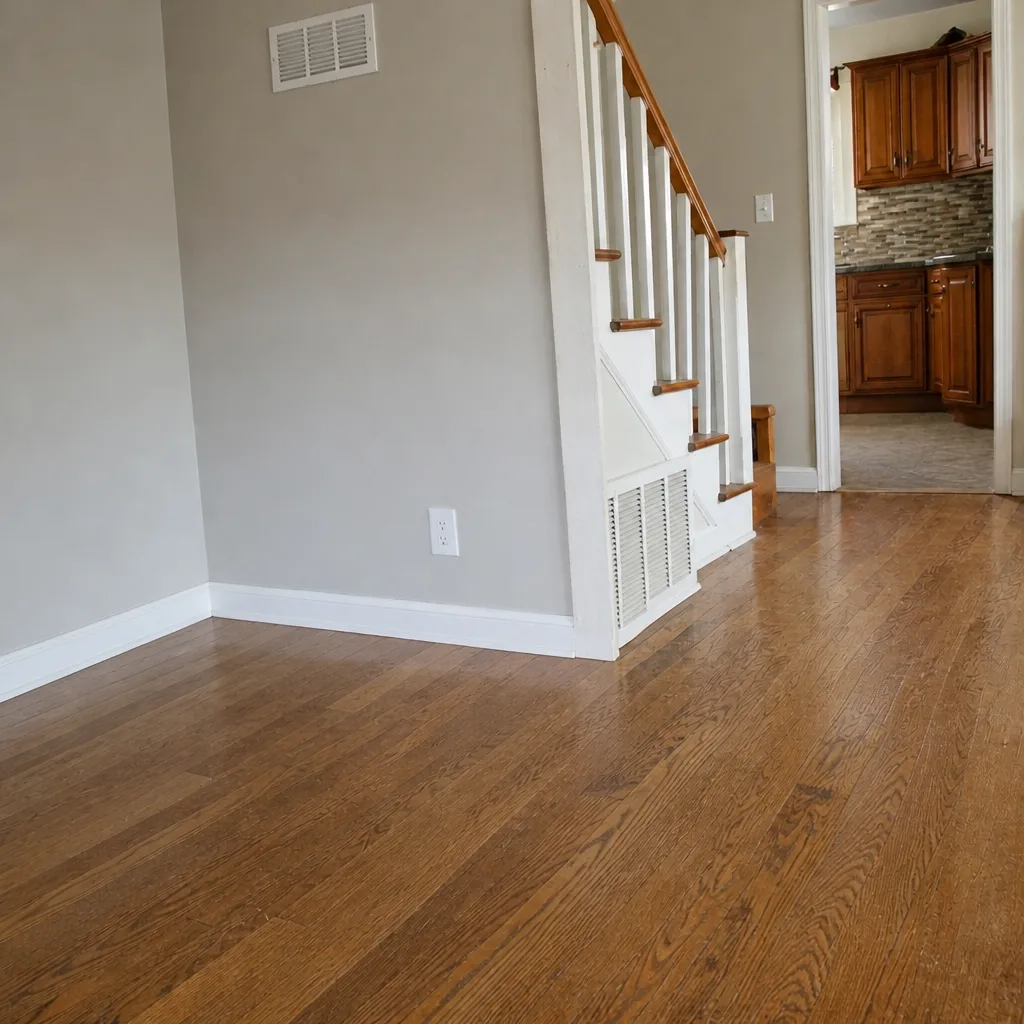 After