
Nikro Air Duct Cleaning in Williamsbridge: A Homeowner’s Guide
Most duct cleaning quotes in Williamsbridge sound identical until you ask what equipment shows up. When a crew arrives with a Nikro unit, they’re carrying machinery used to remediate smoke damage in commercial buildings, not a shop vac with a longer hose. That difference is on the spec sheet, and it changes what actually comes out of your ducts. This guide explains what Nikro equipment does, when it matters for a Williamsbridge home, and how to tell whether a company is really using it.
If you’d rather have the whole system handled than rent a machine and guess, call (844) 443-3861. We answer 24/7, with fast dispatch from 7am to 7pm, Sunday through Friday.
What Makes Nikro Equipment Different From a Consumer Vacuum?
Nikro negative air machines move far more air and filter it to a much finer degree than any vacuum you’d buy at a hardware store. The gap comes down to two specs: airflow capacity and filtration class.
A typical shop vacuum pulls a few dozen cubic feet per minute and filters coarsely. Nikro units are built to move several hundred CFM through HEPA filtration, capturing particles down to 0.3 microns. That’s the same filtration threshold used in professional remediation work, where the goal isn’t just to remove visible dust but to keep fine particulate out of the air while you work.
In practical terms for a Williamsbridge home:
- Airflow: Higher CFM means the machine can actually pull debris loose from the far end of a long duct run instead of stalling at the first bend.
- Filtration: HEPA-class capture traps mold spores, fine drywall dust, and pet dander rather than blowing them back into the room.
- Negative pressure: Nikro units are designed to hold a room or duct system under negative pressure, so dislodged debris travels toward the machine, not into your living space.
None of this is a knock on a smaller setup for a light maintenance pass. The question is whether your ducts need a heavy machine. In a lot of Williamsbridge homes, they do.
Source Removal vs. Contact Vacuuming: Why the Distinction Matters
Source removal means physically agitating and extracting the debris that has settled and bonded inside the duct system. Contact vacuuming is running a vacuum head along accessible surfaces. They look similar on paper and produce very different results.
Dust, dander, and mold spores settle and adhere to duct walls over time, especially on the return side where air moves slower. A contact vacuum removes what it touches. Source removal uses rotary agitation and high-volume negative air to loosen the whole layer and pull it out. That matters if anyone in the house deals with allergies or asthma, because the fine fraction is exactly what a coarse vacuum leaves behind.
Here’s what a proper source-removal pass looks like:
- Registers and returns are sealed to isolate each branch of the system.
- A rotary brush or air whip travels the length of the run, breaking debris loose from the walls.
- A HEPA negative air machine holds the system under pressure so loosened material is captured, not redistributed.
- The HVAC air handler and coil get separate attention, since debris that bypasses the ducts collects there.
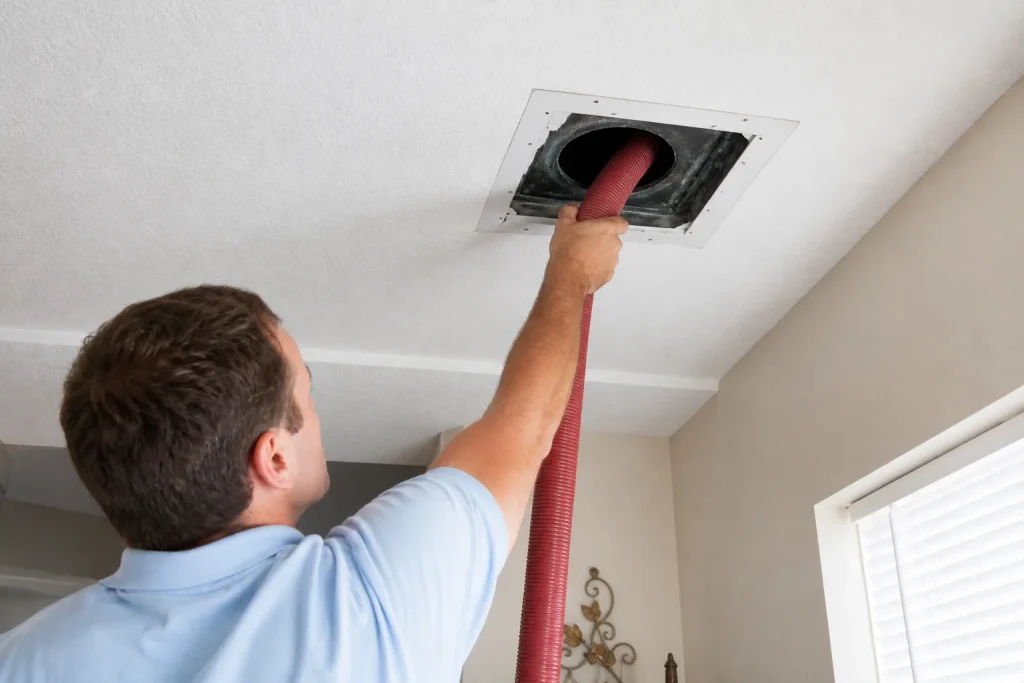
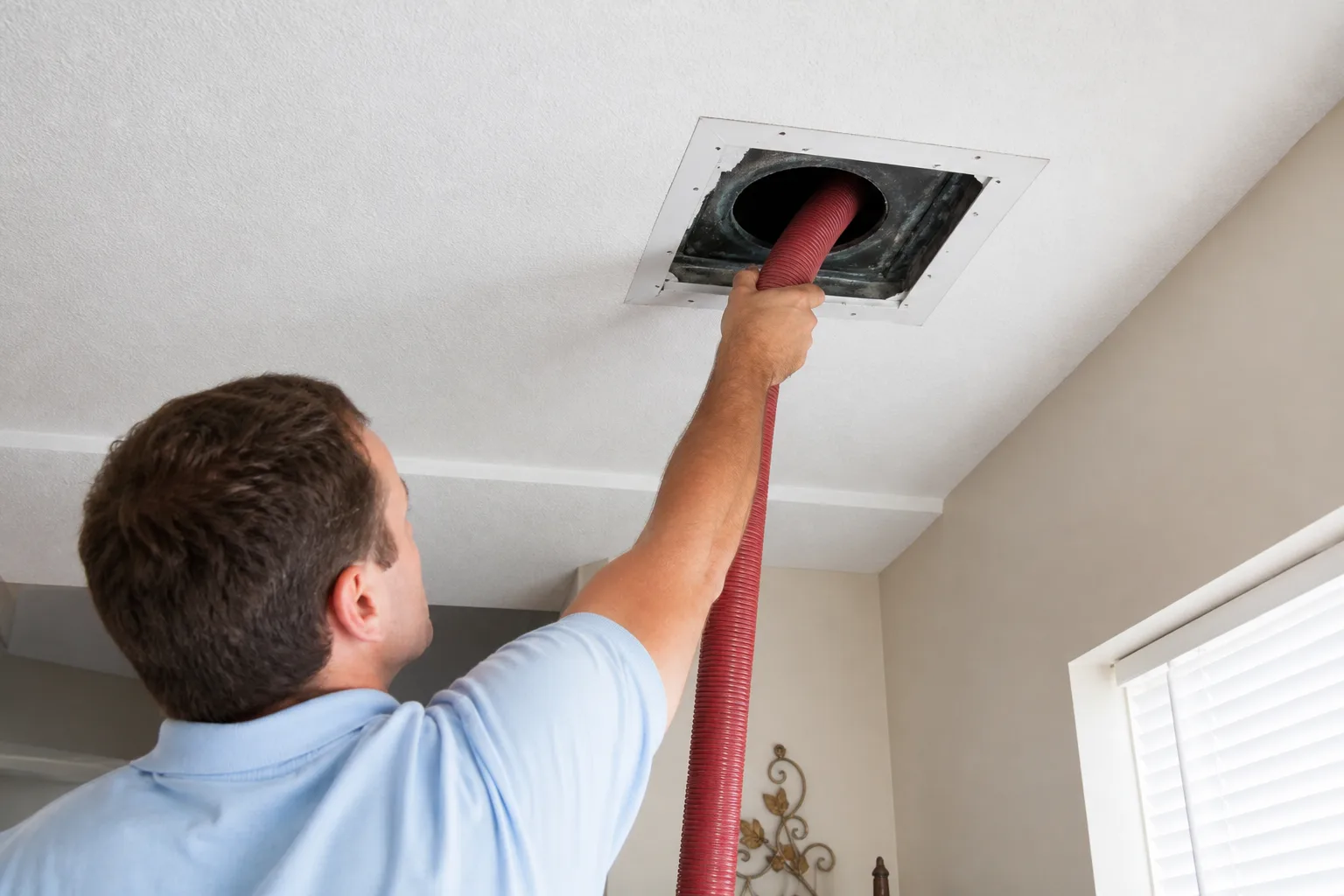
We pair that workflow with Rotobrush rotary tooling for the interior agitation and Nikro units for the air handling, which is how a full-system approach stays contained from start to finish. When you’re comparing quotes in Williamsbridge, ask which of these two methods each company is actually performing.
Which Williamsbridge Homes Actually Need Nikro-Grade Equipment?
Not every house needs the heaviest equipment, and we’ll tell you when it doesn’t. But several common scenarios in Williamsbridge call for a commercial-grade machine rather than a standard residential vacuum.
- Post-renovation debris: Drywall dust, sawdust, and construction grit settle deep into duct runs after a kitchen or bath remodel. That fine material is exactly what coarse vacuums fail to capture.
- Water-damage remediation: If the system was exposed to moisture, the concern is mold spores and musty growth on duct surfaces. HEPA capture is not optional there.
- Heavily soiled flex duct: Flex runs collect debris at the ridges and sag points. High-CFM agitation is often the only way to clean them without replacing the run.
- Older homes with long return runs: Length adds resistance, and a low-flow machine simply can’t pull debris from the far end.
Williamsbridge has a lot of housing stock where the ductwork predates modern sealing standards, so leaks and debris accumulation are common even in homes that look clean. If you notice dust returning quickly after cleaning or a musty smell when the system kicks on, that’s a sign the ducts need more than a surface pass. It’s also worth checking the HVAC cleaning side of the system, since debris that bypasses the ducts settles in the air handler.
How Do You Verify a Company Is Really Using the Equipment?
You verify it by asking for specifics before the job and looking at the machine when it arrives. Plenty of companies advertise “HEPA equipment” and then send a crew with a portable vacuum and a long hose.
Ask these questions when you book:
- What make and model of negative air machine will be on site?
- Are the units HEPA-rated, and can the technician show the filter class on arrival?
- Is the work performed by the company’s own technicians, or subcontracted to another crew with different equipment?
- Will you provide before-and-after photos of our own ducts?
That last one matters most. We take before-and-after photos as a standard part of the job, because it’s the simplest way for a homeowner to see what was actually removed. If a company can’t show you the machine or the photos, the advertised equipment may not be what shows up at your door. The same principle applies when you’re pricing out dryer vent cleaning: ask what tooling is used to clear the full run, not just the first few feet.
How Negative Air Pressure Fits the Whole-System Approach
Negative air pressure is what keeps a cleaning job contained. By sealing the registers and running a Nikro unit to create a pressure zone, the technician ensures air flows toward the machine rather than into the rooms where you live. Without it, loosened debris can cross-contaminate other parts of the house.
Here’s how that works in a Williamsbridge home:
- Seal the openings: Supply and return registers are covered so the only path for air is through the duct system and into the machine.
- Create the pressure zone: The Nikro unit pulls the system negative, so disturbed debris is drawn out instead of settling back on the walls.
- Work the whole pathway: Cleaning one branch at a time keeps the negative pressure intact while each run gets full agitation.
- Deploy air-quality tools: We integrate Honeywell and Aprilaire filtration solutions to help keep the system cleaner between visits, and Abatement Technologies equipment for sanitizing where growth or odor is present.
- Finish and protect: Guardsman-grade products are applied during sanitizing so the surface is left finished, not just cleaned.
Without negative pressure, even a good rotary brush leaves particles loose in the air. That pressure control is what separates a whole-system job from a quick vacuum-and-go. If you want the whole pathway cleaned in one visit, our air duct cleaning service covers the ducts, registers, and air handler together, and we can talk through the rest of the system from there.
When to Call a Pro Instead of Handling It Yourself
Some air-quality maintenance is reasonable to do yourself. Changing filters, keeping returns clear, vacuuming registers: yes. Getting into the duct system with a rented machine: probably not.
Here’s where it makes sense to bring in a trained technician:
- You’ve had a renovation and dust keeps returning no matter how much you clean.
- There’s a persistent musty smell when the HVAC runs.
- Your dryer seems to take longer than it should to dry a load, which can point to a clogged vent and a real fire-safety concern.
- Someone in the house has allergies or asthma and over-the-counter fixes haven’t helped.
Beyond the equipment, there’s a safety and coverage side to it. A trained team can inspect duct connections for leaks, catch flex runs that have come loose, and confirm a dryer vent is actually clear end to end. Our technicians have up to 13 years of experience, and that experience is what keeps a cleaning job from becoming a repair job.
The Bottom Line
Nikro equipment is a real differentiator, but only if the company actually uses it. Ask what machine arrives, confirm it’s HEPA-rated, and expect before-and-after photos. For most Williamsbridge homes with heavy dust, post-renovation debris, or moisture-related concerns, the equipment matters as much as the technician running it.
A few points to hold onto:
- Nikro negative air machines move more air and filter finer than consumer vacuums.
- Source removal beats contact vacuuming for allergen and mold-spore extraction.
- Sealed registers and negative pressure prevent cross-contamination during the job.
- Before-and-after photos are the simplest proof the work was done.
If you’re in Williamsbridge and need help, Air Duct Cleaning Williamsbridge offers free estimates. Call (844) 443-3861. We answer 24/7, with fast dispatch from 7am to 7pm, Sunday through Friday. One team handles the entire air pathway, so you’re not booking a second contractor.
Frequently Asked Questions
It’s worth it when the ductwork is heavily soiled, recently renovated, or exposed to moisture. Nikro HEPA units capture fine debris a standard vacuum leaves behind, so the results hold up longer. For very light maintenance, a smaller setup may be enough, and an honest company will tell you which situation you’re in.
Ask what make and model of negative air machine will be on site, and look at the filter class when the crew arrives. A company actually using Nikro units will have no trouble naming the equipment and showing before-and-after photos of your ductwork.
Pricing is set per job by a written estimate based on the size and condition of the system, not a teaser per-vent rate. We confirm one flat price before any work starts, so there’s no surprise invoice once the technician is on site. Call (844) 443-3861 for an exact quote. Estimates are free.
Most homes don’t need it on a set schedule. It’s driven by conditions: a recent renovation, visible dust returning quickly, a musty odor, or a household with allergy or asthma concerns. If none of those apply and the system was cleaned recently, waiting is fine. Call (844) 443-3861 to talk through your situation. Estimates are free.
Written by the team at Air Duct Cleaning Williamsbridge.
Need Air Duct Cleaning Help?
Call Air Duct Cleaning Williamsbridge - the local pro we connect you with is licensed and insured, with free written estimates in Williamsbridge.
(844) 443-3861